
How to Tell Your Children You Have Cancer: A Practical Guide for Parents

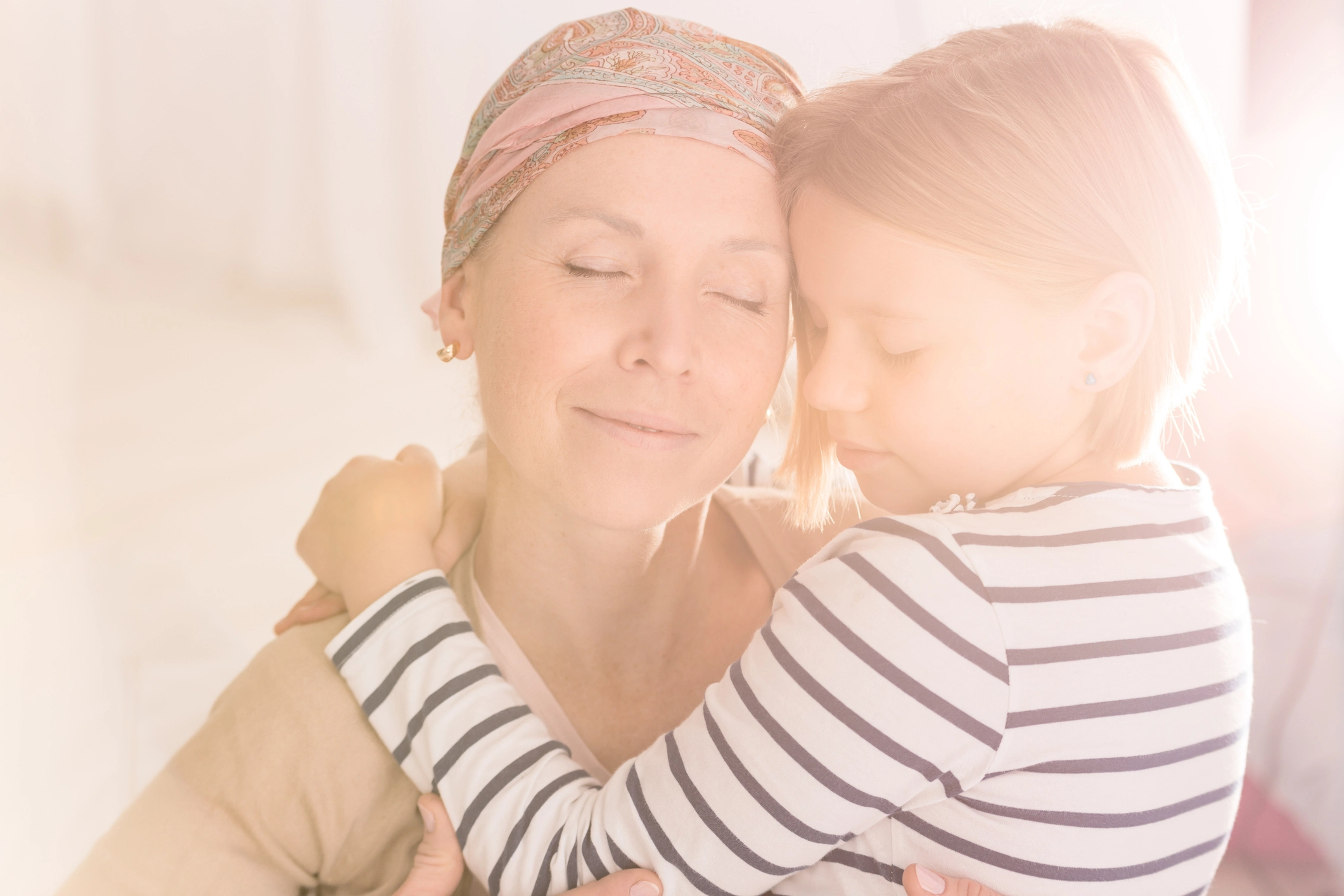
Madre con cáncer abrazando con ternura a su hija pequeña, ambas con los ojos cerrados en un momento de conexión emocional.

Table of contents

Receiving a cancer diagnosis is an emotional blow that is difficult to process, and sharing this news with your children can become one of the most challenging moments of the process. Many parents struggle between protecting their children from pain and being honest with them. However, communicating the situation clearly, sensitively, and in a way that is appropriate for their level of understanding is key to their emotional well-being. In this guide, we share strategies for preparing for the conversation, approaching it with empathy, and supporting your children throughout the cancer journey.

Why is it important to talk to your children about your diagnosis?

Silence generates more fear than the truth

Children, even the youngest ones, notice changes at home: emotional tone, changes in routines, hospital visits. When they are not told what is happening, they tend to imagine scenarios that can be even more distressing than reality. Talking honestly—always in an age-appropriate way—builds trust, makes them feel safe and part of the family process. Honest communication is a form of care.


How to prepare for the conversation with your children

Assess their age and level of understanding

Each stage of child development requires a different approach.

  • Young children (3–7 years): they need simple, concrete and repetitive explanations. They can understand that mummy or daddy is ill and needs care.
  • Preteens (8–12 years old): they already understand concepts such as illness and treatment, but may have hidden fears. They respond well to clear and emotionally contained information.
  • Teenagers (13+ years old): they usually demand more details and may do their own research. It is important to offer them a space for honest dialogue, recognising their emotional maturity without overwhelming them.

Find the right time and place

Choose a quiet moment, without rushing or distractions. Ideally, you should be emotionally available and have privacy for the conversation. Avoid times of family tension or when you yourself are very upset. A calm atmosphere helps the message come across more clearly and with greater restraint.


What to say and how to say it

Keys to emotional and effective communication

Speak sincerely, avoiding unnecessary details that may confuse or distress them. Explain that cancer is a serious illness, but that there are treatments available and a medical team to support them throughout the process. Reassure them that it is not anyone’s fault, that they are safe and that they can talk to you whenever they need to.

Answer their questions naturally.

Allow them to express their feelings without correcting or minimising their emotions. It is normal for them to ask if you are going to die, if you will lose your hair or if you will continue working. Do not promise certainties that you cannot guarantee, but offer reassurance: you will take care of them and there are adults who are helping. Being emotionally present is more important than having all the answers.


Mistakes to avoid when talking to children about cancer.

  • Hiding the truth or lying: children often sense that something serious is happening. Lying can erode their trust.
  • Excessive minimisation: phrases such as “it’s just a long cold” can cause more confusion and anxiety.
  • Suppressing their emotions or preventing them from asking questions: children need space to express themselves. Cutting off these channels can cause them to internalise their distress.
  • Using confusing euphemisms: talking about ‘a lump’, ‘a thing’ or ‘being a bit under the weather’ may not be helpful and may cause more fear.


How to provide emotional support to your children during the process

Routines, affection and space to express themselves

Maintaining family routines—as far as possible—provides stability. Being present, showing affection and validating emotions such as sadness, anger or fear helps them get through this time without feeling alone or judged. It is not about avoiding their discomfort, but about accompanying them.

External support if necessary

Having professional support can be a great help. Child psychologists or psycho-oncologists can offer specific tools depending on the age of your children and your family dynamics. Informing the school can also be beneficial, so that they can be alert to emotional signs or changes in academic performance.


Recommendations from IVOQA

The psycho-oncology care team at IVOQA recommends not facing this process alone. We know that every family is unique, which is why we offer emotional support tailored to the needs of mothers, fathers and children. Our team can guide you on how to approach family communication and help you care for the emotional well-being of all family members.

Talking to your children about cancer can be scary, but it is an act of love and deep care. It strengthens bonds, builds trust and provides an emotional framework for understanding what is happening. You are not alone in this process. At IVOQA, we are here to accompany you, help you find the words and take care of what matters most: your well-being and that of your family.


Dr. Rosa María Morera

Radiation Oncology

  • Specialist in Radiation Oncology.
  • Degree in Medicine and Surgery.  Faculty of Medicine, Complutense University of Madrid (2-8-1990).
  • Head of the Radiation Oncology Department, Hospital Universitario La Paz, Madrid.
  • Expert with university micro-credential mention in Physics, Technology and Protontherapy. King Juan Carlos University.
  • Higher University Course in Design and Management of Proton Therapy Centres. King Juan Carlos University.
  • XIX Programme of Senior Management in Health Institutions. IESE Business School. University of Navarra.
  • Master in Administration and Management of Health Services XXIV Edition (2013-2014). Pompeu Fabra University.
  • Doctoral Thesis Reading: ‘Radical thoracic irradiation and pulmonary functional study in patients with locally advanced non-small cell lung cancer. Systematic review and prospective case series’ . Qualification of outstanding ‘cum laude’.
  • Doctorate courses: Complutense University of Madrid (1995-1997).
  • She is a researcher in numerous clinical trials, publishing several national and international scientific articles.

Dr. Jose María Oliver

Breast radiology

  • Breast radiologist and specialist in cryoblation of breast lesions in the IVOQA Breast Unit.
  • Degree in Medicine and Surgery from the University of Navarra (1983-1989). Specialisation via MIR in Radiology. Number 289.
  • Specialist in radiology in several renowned hospitals, international reference and pioneer in the application of cryoablation to breast pathology in Spain.
  • Head of the Breast Radiology Section at the Hospital Universitario La Paz.
  • Member of the Spanish Society of Medical Radiology (SERAM) and the Spanish Society of Diagnostic Imaging (SEDIM).

Dr. Jesús Cañete Gómez

General and Digestive Surgery. Oncological Surgery

  • Graduate in Medicine and Surgery from the University of Seville (2000- 2006).
  • Specialist in colon and rectal cancer surgery using a minimally invasive approach.
  • Training in transanal rectal cancer treatment (TAMIS and TaTME).
    Training in minimally invasive surgery at Jackson Memorial Hospital (Miami).
  • Specialist in General Surgery at Viamed Fatima Hospital, Seville (currently).
  • Doctor of Medicine from the University of Seville (‘cum laude’).
  • Associate Professor at the University of Seville Founder of the surgical team Laparoscopic Surgery Seville – MISS (Minimally Invasive Surgical Solutions) – minimally invasive surgical techniques in scheduled and emergency surgery.
  • He has written numerous publications in journals and books and is a member of the Spanish Society of Obesity Surgery (SECO), as well as the Spanish Association of Surgeons (AEC) and the Andalusian Association of Surgeons (ASAC).

Dr. Juan José Segura Sampedro

General and digestive surgery. Oncological Surgery

  • Degree in Medicine and Surgery from the University of Seville. 2003-2009.
  • Specialist in peritoneal carinomatosis.
  • Doctor of Medicine from the University of Seville (‘cum laude’).
  • Oncological Surgeon in the Section of Peritoneal, Retroperitoneal and Soft Parts Oncological Surgery, Department of General and Digestive System Surgery, Hospital Universitario La Paz, Madrid.
  • Associate Professor of Surgery, Faculty of Medicine, University of the Balearic Islands, Palma de Mallorca.
  • 3IP in the Research Group in Advanced Oncological Surgery, m-Health and Innovation in Surgical Technology, Institute for Health Research of the Balearic Islands (IdISBa), Palma de Mallorca.
  • He has written numerous publications in journals and books and is a member of the Spanish Society of Surgical Oncology (SEOQ), the Spanish Society of Coloproctology (AECP), the Spanish Association of Surgeons (AEC), the European Society of Oncological Surgery (ESSO) and the Spanish Group of Peritoneal Oncological Surgery (GECOP).

Pablo Soto

Specialist in sports training for oncology patients

  • Higher Degree in Dietetics (2020-2022)
  • Treatment and rehabilitation of cancer patients

Dr. Gonzalez Larriba

Medical oncology

  • Professor of Medical Oncology at the Complutense University of Madrid
  • Head of the Medical Oncology Section of the Hospital Clínico San Carlos in possession of the European Certificate in Oncology
  • Recognition of 6 six-year research periods + 1 six-year period of knowledge transfer
  • Master in Oncology Services Management by the University of Alcala de Henares
  • Visiting Professor of Oncology at the University of Palermo (Italy)
  • Multiple stays in international centres (Memorial Sloan Kettering Cancer Center, Gustave Roussy Institute, University of Lyon, Princess Margaret Hospital in Toronto, University of Pittsburgh)
  • Maximum recognition of the Professional Career by the Regional Ministry of Health of the Community of Madrid
  • Director of the Master’s Degree in Genitourinary Tumours at the Complutense University of Madrid
  • Founder and member of the Board of Directors of the Spanish Lung Cancer Group, Spanish Genitourinary Tumour Group and Spanish Melanoma Group
  • Member of the Board of Directors of the Spanish Society of Medical Oncology
  • Miembro de la European Society of Medical Oncology, American Society of Clinical Oncology, International Association for the Study od Lung Cancer, etc.
  • Author of more than 300 scientific articles, 400 conference papers and 60 scientific books, as well as speaker in more than 400 conference papers

Francisco Flores

Physiotherapy

  • Graduate in physiotherapy. UEM.
  • Master’s degree in respiratory physiotherapy. UNIVERSITAT
  • ROVIRA i VIRGILI.
  • MASTER specialist in conservative and invasive physiotherapy of myofascial pain syndrome and fibromyalgia. UAH.
  • SPIROMETRIST by the ERS-SEPAR for the performance and interpretation of SPIROMETRY.
  • MASTER Specialist in intratissue percutaneous electrolysis treatments EPI.
  • Specialist in the use and application of the INDIBA ACTIV system.
  • MASTER Specialist in Biomechanical Analysis, Intervention and Treatment “Check yourMOtion”.
  • NATIONAL CLASSIFIER for athletes with cerebral palsy.
  • NATIONAL CLASSIFIER of athletics for people with physical disabilities.
  • RESEARCH PROJECT: “Respiratory physiotherapy as a treatment for ARVC in high performance athletes”.

Dr. Javier Heras Aznar

BREAST UNIT

  • Graduate in Medicine and Surgery from Universidad Autonoma de Madrid 1992.
  • Specialist via MIR in Family Medicine at Hospital Universitario Ramón y Cajal 1994-1996.
  • Specialist via MIR in OBSTETRICS AND GYNECOLOGY at Hospital Universitario Santa Cristina in Madrid 1997-2001.
  • Specialized in the last 27 years in Gynecological Oncology and Breast Pathology, both malignant and benign, with experience in Oncoplastic Surgery.
  • Specialization Course in Oncoplastic Breast Surgery 2015.
  • Coordinator of the Breast Unit and the Breast Tumors and Gynecology Oncology Committee in Hospital Universitario Infanta Sofía.
  • Main Author of the Breast Unit Accreditation Project (Hospital Universitario Infanta Sofía) 2019-2020.

Dr. Beatriz García-Conde

DIGESTIVE SYSTEM MEDICINE

  • Graduate in Medicine and Surgery.
  • MIR specialisation in Digestive System Medicine, Puerta de Hierro University Hospital in Majadahonda. Currently working at the 12 de Octubre University Hospital.
  • Specialist in capsule endoscopy and in diagnostic and therapeutic endoscopy: chromoendoscopy, colon cancer screening, digestive dilatations, PEG placement, endoluminal vacuum therapy (fistulas/leaks), polypectomy/mucosectomy.
  • She also a general digestive consultant with a Master’s Degree in Neurogastroenterology.

Dr. Micaela Riat Castro Zocchi

DIGESTIVE SYSTEM MEDICINE

  • Graduate in Medicine and Surgery.
  • MIR specialisation in Digestive System Medicine, Princesa Hospital (Madrid).
  • Clinical consultation. Diagnostic and therapeutic endoscopy: Chromoendoscopy, Colon Cancer Screening, Placement of digestive prosthesis (oesophagus, colon), Digestive dilatations, PEG Placement, Endoluminal Vacuum Therapy (fistulas/leaks), Polypectomy/mucosectomy. Experience in Bariatric Endoscopy: Intragastric balloon.

Dr. Diana Fresneda Cuesta

DIGESTIVE SYSTEM MEDICINE

  • Graduate in Medicine and Surgery.
  • MIR specialisation in Digestive System Medicine, Jiménez Díaz Foundation. (Madrid)
  • Clinical consultation. Specialist in Endoscopic Capsule and in Diagnostic and Therapeutic Endoscopy: Chromoendoscopy, Colon Cancer Screening, Ligation of Oesophagus Varices, Placement of digestive prosthesis (oesophagus, colon), Digestive dilatations, PEG Placement, Endoluminal Vacuum Therapy (fistulas/leaks), Polypectomy/mucosectomy. Experience in bariatric endoscopy: intragastric balloon, POSE method and Endo-sleeve with POSE system, etc.

Dr. Teresa Valdés Lacasa

DIGESTIVE SYSTEM MEDICINE

  • Graduate in Medicine and Surgery
  • MIR specialisation in Digestive System Medicine, 12 de Octubre University Hospital (Madrid). Advanced Endoscopy Fellowship (ERCP and digestive prostheses) at Ninewells Hospital (United Kingdom). 2020-2021.
  • Clinical consultation and abdominal ultrasound.
  • Specialist in pancreatico-biliary conditions and therapeutic endoscopy: ERCP, placement of digestive prostheses (oesophagus, duodenum, colon, biliary), digestive dilatations, placement of PEGs, endoluminal vacuum therapy (fistulas/leaks), polypectomy/mucosectomy.

Dr. Andrés J. del Pozo García, MD. PhD.

DUAL SPECIALISATION IN DIGESTIVE SYSTEM MEDICINE / FAMILY AND COMMUNITY MEDICINE

  • Graduate in Medicine and Surgery.
  • Dual specialised training (MIR) at the Princesa University Hospital (Madrid).
  • Specialist in Digestive System Medicine and Specialised in Family and Community Medicine
  • PhD in Medicine from the Autonomous University of Madrid. Cum Laude. 2020.
  • Member of S.E.P.D, S.E.E.D., A.E.G, E.S.G.E, AESPANC, Board Member of GETTEMO; Consultant of Apollo Endosurgery in 2021.

Dr. José María Abadal Villayandre

SPECIALIST IN VASCULAR INTERVENTIONAL RADIOLOGY

  • Graduate in Medicine and Surgery from Navarra University.
  • MIR specialisation in Radiology, Radiodiagnosis at Gregorio Marañón University Hospital.
  • PhD in Radiodiagnosis from the Complutense University of Madrid. Cum Laude Doctoral Thesis.
  • Specialist in Vascular Interventional Radiology, accreditation from the Spanish Society of Interventional Radiology.
  • European Board Interventional Radiology (EBIR) Health Sciences) at Alfonso X el Sabio University. 2010-2014.
  • Medical Director of the “Centro de Radiología y Diagnóstico por Imagen”.
  • Scientific and research activity with numerous publications and research studies.
  • Director and professor of Interventional Vascular Radiology at the I-XI Endo-school. Teaching activity.
  • Member of SERAM (Spanish Society of Medical Radiology), CIRSE (Cardiovascular Interventional Radiology Society Europe), and Secretary of SERVEI (Spanish Society of Interventional Vascular Radiology).

Belén Pérez Peiro. Psychologist

SPECIALIST IN PSYCHO-ONCOLOGY

  • Graduate in Psychology
  • Clinical psychologist, Gregorio Marañón University General Hospital, Psycho-oncology, Gynaecological Psychology, Neuropsychology, Detoxification and Out-patient Hospital, inflammatory bowel disease and teenagers.
  • Clinical activity at the Niño Jesús Children’s University Hospital, Psychiatric and Eating Disorder Units.
  • Expert qualification in Psychosomatic Medicine and Health Psychology.
  • Expert qualification in Psychopathology and Psychiatry from the Spanish Society of Psychosomatic Medicine and Medical Psychology.
  • Specialist qualification in Psychotherapy and projective techniques, both of which are recognised by the Madrid Official Association of Psychologists.

Dr. Ana María Moreno

SPECIALIST IN INTERNAL MEDICINE AND NUTRITIONAL PREHABILITATION

  • Graduate in Medicine and Surgery. 1986– 1992.
  • Extraordinary Graduation Award. 1992.
  • MIR specialisation in Internal Medicine. Number 283.
  • Master’s Degree in Palliative Care from Valladolid University. 2011.
  • University Master’s Degree in Advanced Chronic Nursing and palliative care from Antonio de Nebrija University. 2017.
  • PhD Courses 1993.
  • Extensive professional career in many renowned hospitals.
  • Head of Internal Medicine Services at Viamed Santa Elena (Madrid). September 2021 – Present.
  • Teaching and research work.
  • Numerous publications and papers. Participation in courses and seminars.