

VIAMED INSTITUTE OF ADVANCED SURGICAL ONCOLOGY


NIPS: Normothermic Intraperitoneal Chemotherapy

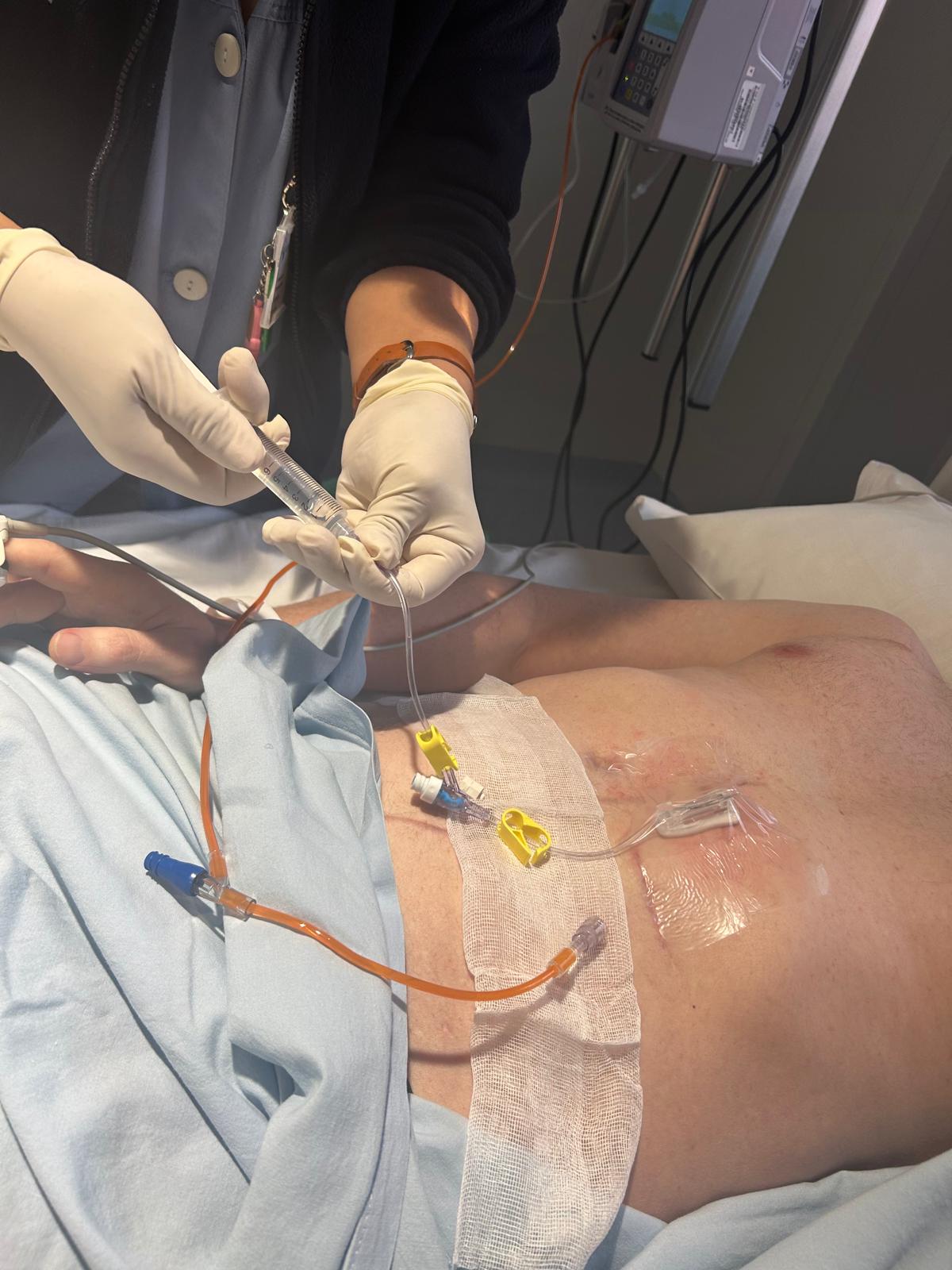
Normothermic Intraperitoneal Chemotherapy, commonly known as NIPEC or NIPS (Normothermic Intraperitoneal Chemotherapy), represents an advanced pillar in the treatment of peritoneal carcinomatosis. This technique involves administering cytostatic drugs at body temperature (37°C) directly into the abdominal cavity via a catheter implanted in the abdomen, similar to the ports used for intravenous chemotherapy.

Unlike other single-dose procedures, NIPS is designed for prolonged and repeated treatments, allowing sustained contact between the drug and the tumor cells. This is exceptionally valuable for patients who require ongoing control of microscopic disease or as a conversion therapy prior to major surgery. In fact, in Japan, some patients receive NIPS treatment continuously for years.

What Does NIPS Treatment Involve?

The NIPEC procedure is based on the physiological principle of the blood-peritoneum barrier. This barrier allows for much higher doses of chemotherapy to be applied inside the abdomen than could ever be tolerated intravenously, as the drug barely passes into the bloodstream. Consequently, systemic side effects are reduced while the therapy acts directly on the peritoneal metastases.

Unlike HIPEC, which is performed during surgery under general anesthesia, NIPS is typically administered as follows:

Catheter Access

A peritoneal access device (similar to an abdominal port-a-cath) is placed either through a minimally invasive procedure performed under sedation by interventional radiologists or in the operating room via laparoscopy by surgical oncologists. This catheter remains hidden beneath the skin of the abdomen.

Body Temperature Administration

The drug is infused at normal body temperature without applying heat, eliminating thermal stress on the tissues. It is carried out in the day hospital while the patient is awake—much like standard intravenous chemotherapy—making it comfortable and very well tolerated.

Cyclic Treatment

The patient receives multiple scheduled sessions (cycles), allowing the chemotherapy to target tumor cells at different stages of their growth cycle. Typically, intraperitoneal chemotherapy is administered one day a week for three consecutive weeks each month, followed by a rest week.

Bidirectional Chemotherapy

By protocol, it is most commonly combined with conventional intravenous chemotherapy. This attacks the tumor from two fronts simultaneously to maximize efficacy.


What Differentiates NIPS from HIPEC and PIPAC?

It is common for patients to wonder which technique is most appropriate for their case. While all three act on the peritoneum, their objectives and methods differ significantly:

Feature HIPEC PIPAC NIPEC (NIPS)
Temperature Hyperthermic (40–43°C) Normothermic (Room Temp) Normothermic (37°C)
Administration Single dose following cytoreductive surgery Pressurized aerosol (via Laparoscopy) Liquid solution via catheter
Frequency Once per surgery Cycles (every 6–8 weeks) Cycles (one day a week for 3 weeks per month, with 1 rest week)
Primary Objective Eliminate microscopic disease after removing the visible tumor. Palliation or conversion in inoperable cases. Palliation or conversion in inoperable cases.
Thermal Stress High (enhances drug penetration). None. None (ideal for long-term treatments).
Indication Patients with resectable peritoneal carcinomatosis who are candidates for cytoreductive surgery. Patients with unresectable peritoneal carcinomatosis who are not candidates for cytoreductive surgery due to disease extent or location. Patients with unresectable peritoneal carcinomatosis who are not candidates for cytoreductive surgery due to disease extent or location.

The Distinct Value of NIPS

While HIPEC provides an immediate, one-time treatment following complex cytoreductive surgery, NIPS is indicated for patients who are not candidates for cytoreductive surgery and HIPEC due to the extent of their disease (high PCI) or its anatomical location.

Because it does not require general anesthesia for every session or cause the physical strain associated with heat, it is an exceptionally well-tolerated treatment. It allows for constant control of microscopic disease, aiming to prevent the tumor from proliferating between treatment cycles.

Clinical trial results for gastric cancer with peritoneal metastases treated with NIPS demonstrate remarkable disease control, and in some cases, successful conversion that makes subsequent surgery possible.

Evidence-Based NIPS Technique Results: DRAGON-01

The DRAGON-01 trial represents a turning point in the treatment of gastric cancer with peritoneal metastases. It is the first Phase III study to demonstrate a clear survival benefit by combining intraperitoneal and intravenous chemotherapy using a NIPS (Neoadjuvant Intraperitoneal and Systemic Chemotherapy) strategy.

The study included 222 patients with confirmed gastric adenocarcinoma and peritoneal metastases, with no extra-abdominal disease and no prior treatments. Patients were randomized to receive conventional systemic chemotherapy or a combination of intraperitoneal and intravenous chemotherapy with paclitaxel associated with oral S-1.

The results showed a significant improvement in both overall survival and disease control:

Overall Survival
19.4 months
With NIPS treatment
13.9 months
With conventional systemic chemo
+5.5 m
Absolute Gain
34%
Risk Reduction
Progression-Free Survival
11.2 months
With NIPS treatment
7.2 months
In the control group (conventional)
Long-Term Survival
Timeline NIPS Treatment Control Group
At 1 Year 69.6% 54.1%
At 2 Years 37.2% 20.3%
At 5 Years 11.4% 7.9%

Another highly relevant aspect was the emergence of a small but significant proportion of long-term survivors, an outcome historically rare in peritoneal carcinomatosis of gastric origin.

Furthermore, these benefits were achieved without a significant increase in severe toxicity; rates of neutropenia and leukopenia remained similar to conventional treatment, and no treatment-related deaths were recorded.

Collectively, the DRAGON-01 study confirms that administering chemotherapy directly into the abdominal cavity, combined with systemic treatment, improves survival, delays tumor progression, and expands therapeutic options for patients. In certain cases, the response achieved can even open the door to subsequent surgical strategies with curative intent.

Which Patients Can Be Treated with NIPS?

NIPS treatment is an advanced therapeutic option for patients with advanced-stage cancer who present with spread within the peritoneum (peritoneal carcinomatosis) and are not candidates for cytoreductive surgery and HIPEC. As it is a well-tolerated procedure, it allows for the treatment of patients across different phases of their illness.

The primary tumor can be located:

  • Inside the abdomen: Stomach cancer, ovarian cancer, colon cancer, small bowel cancer, and appendix tumors.
  • Outside the abdomen: Breast cancer or lung cancer with secondary involvement of the peritoneum.
  • Within the peritoneum itself: Peritoneal mesothelioma and primary peritoneal cancer.

Why Choose the IVOQA Institute for Your Treatment?

The Viamed Institute of Advanced Surgical Oncology (IVOQA) has established itself as a national and international reference center for the treatment of malignant peritoneal pathology.

Leadership and Experience

Our team is a global reference in intraperitoneal chemotherapy administration techniques. Their extensive track record and participation in international scientific forums guarantee that patients receive the most up-to-date, evidence-based treatments.

Pioneers in Spain

At IVOQA Madrid, we are pioneers in implementing cutting-edge techniques such as PIPAC, ePIPAC, and now NIPS, making us one of the few centers in Europe to offer the complete spectrum of advanced surgical oncology options.

Expert Tumor Board

Each patient is evaluated individually by a Multidisciplinary Peritoneal Pathology Committee. We do not believe in generic solutions; we design a tailored strategy (personalized medicine) to determine if NIPS is the best option.

State-of-the-art Technology

We possess the technological infrastructure of the Hospital Viamed Santa Elena, specifically designed for complex, minimally invasive oncological procedures.

International Preparation.

Our team has been trained in the Japanese technique for intraperitoneal port placement, which is essential for NIPS administration.

Advantages of NIPS at IVOQA Madrid

The application of normothermic chemotherapy at our center offers significant benefits compared to exclusively intravenous conventional treatments:

Reduced Toxicity and Side Effects

Much like the PIPAC technique, chemotherapy administered via NIPS acts locally. The peritoneal barrier prevents a large portion of the drug from entering the bloodstream, drastically reducing the common side effects of systemic chemotherapy, such as hair loss, severe nausea, or weakened immune defenses.

Outpatient Treatment and Greater Comfort

NIPS is a minimally invasive procedure. Following the placement of the access catheter, infusion sessions are typically performed on an outpatient basis, allowing the patient to return to their family environment quickly and maintain an excellent quality of life during treatment.

Therapeutic Synergy (Bidirectional Chemotherapy)

One of the greatest advantages is the ability to combine NIPS with traditional systemic chemotherapy. This "bidirectional" approach allows tumor cells to be attacked from inside the abdominal cavity and, simultaneously, through the bloodstream, maximizing the chances of tumor response.

Frequently Asked Questions (FAQs)

Is the NIPEC procedure painful?

The administration of the chemotherapy itself is not typically painful. The drug is introduced at body temperature through a previously placed catheter or access port. Most patients describe a sensation of abdominal fullness or mild discomfort similar to heavy digestion, which subsides shortly after the session ends.

How many sessions or cycles are necessary?

Unlike HIPEC, which is a single dose delivered during surgery, NIPS is designed as a cyclic treatment. The number of sessions depends on the type of tumor, the patient’s response, and whether the goal is to reduce the disease for subsequent surgery or keep it under controlled maintenance. Generally, cycles are scheduled for one day a week for three weeks a month, followed by a rest week, in coordination with systemic chemotherapy.

Does it require a prolonged hospital stay?

No. One of the great advantages of NIPS at IVOQA is its minimally invasive profile. Except for the day of catheter placement, the treatment sessions can be performed on an outpatient basis. This allows patients to maintain their routine and remain in their family environment, which is vital for their emotional well-being.

Can I receive NIPEC while undergoing conventional chemotherapy?

Yes, and in fact, it is highly recommended. This is what we call Bidirectional Therapy. While intravenous chemotherapy attacks tumor cells via the bloodstream, NIPEC acts directly on implants within the peritoneum. Both treatments complement each other to achieve a higher response rate.

What are the most frequent side effects?

Because it acts locally within the abdomen, systemic side effects (such as hair loss, extreme fatigue, or a drop in white blood cell counts) are much milder or nonexistent compared to intravenous chemotherapy alone. The most common side effects are local and temporary:

  • Mild abdominal bloating.
  • Discomfort or tenderness around the catheter area.
  • Mild nausea in the hours following the procedure.

What happens if my disease is resistant to conventional chemotherapy?

NIPS offers a completely different route of administration. By applying the drug directly into the peritoneum, we achieve much higher concentrations of chemotherapy than can be achieved intravenously. This can be effective even in tumors that have stopped responding to conventional treatment, occasionally achieving a “conversion” that allows the patient to become a candidate for surgery once again.

If I am receiving treatment at another hospital that does not have a PIPAC or NIPS unit, how can I benefit from these treatments?

The majority of our patients receive their intravenous oncology treatment at their reference hospital (in other cities) and travel to Madrid for their intraperitoneal treatments. NIPS treatment is administered one day weekly for three weeks a month, with one week of rest.

Would you like to schedule a consultation with our team?

Dr. Delia Cortés Guiral’s team is at your disposal to resolve any technical or logistical queries regarding your treatment. Personalized medicine begins with clear and transparent communication.

Do not hesitate to request an appointment with our specialists

Dr. Rosa María Morera

Radiation Oncology

  • Specialist in Radiation Oncology.
  • Degree in Medicine and Surgery.  Faculty of Medicine, Complutense University of Madrid (2-8-1990).
  • Head of the Radiation Oncology Department, Hospital Universitario La Paz, Madrid.
  • Expert with university micro-credential mention in Physics, Technology and Protontherapy. King Juan Carlos University.
  • Higher University Course in Design and Management of Proton Therapy Centres. King Juan Carlos University.
  • XIX Programme of Senior Management in Health Institutions. IESE Business School. University of Navarra.
  • Master in Administration and Management of Health Services XXIV Edition (2013-2014). Pompeu Fabra University.
  • Doctoral Thesis Reading: ‘Radical thoracic irradiation and pulmonary functional study in patients with locally advanced non-small cell lung cancer. Systematic review and prospective case series’ . Qualification of outstanding ‘cum laude’.
  • Doctorate courses: Complutense University of Madrid (1995-1997).
  • She is a researcher in numerous clinical trials, publishing several national and international scientific articles.

Dr. Jose María Oliver

Breast radiology

  • Breast radiologist and specialist in cryoblation of breast lesions in the IVOQA Breast Unit.
  • Degree in Medicine and Surgery from the University of Navarra (1983-1989). Specialisation via MIR in Radiology. Number 289.
  • Specialist in radiology in several renowned hospitals, international reference and pioneer in the application of cryoablation to breast pathology in Spain.
  • Head of the Breast Radiology Section at the Hospital Universitario La Paz.
  • Member of the Spanish Society of Medical Radiology (SERAM) and the Spanish Society of Diagnostic Imaging (SEDIM).

Dr. Jesús Cañete Gómez

General and Digestive Surgery. Oncological Surgery

  • Graduate in Medicine and Surgery from the University of Seville (2000- 2006).
  • Specialist in colon and rectal cancer surgery using a minimally invasive approach.
  • Training in transanal rectal cancer treatment (TAMIS and TaTME).
    Training in minimally invasive surgery at Jackson Memorial Hospital (Miami).
  • Specialist in General Surgery at Viamed Fatima Hospital, Seville (currently).
  • Doctor of Medicine from the University of Seville (‘cum laude’).
  • Associate Professor at the University of Seville Founder of the surgical team Laparoscopic Surgery Seville – MISS (Minimally Invasive Surgical Solutions) – minimally invasive surgical techniques in scheduled and emergency surgery.
  • He has written numerous publications in journals and books and is a member of the Spanish Society of Obesity Surgery (SECO), as well as the Spanish Association of Surgeons (AEC) and the Andalusian Association of Surgeons (ASAC).

Dr. Juan José Segura Sampedro

General and digestive surgery. Oncological Surgery

  • Degree in Medicine and Surgery from the University of Seville. 2003-2009.
  • Specialist in peritoneal carinomatosis.
  • Doctor of Medicine from the University of Seville (‘cum laude’).
  • Oncological Surgeon in the Section of Peritoneal, Retroperitoneal and Soft Parts Oncological Surgery, Department of General and Digestive System Surgery, Hospital Universitario La Paz, Madrid.
  • Associate Professor of Surgery, Faculty of Medicine, University of the Balearic Islands, Palma de Mallorca.
  • 3IP in the Research Group in Advanced Oncological Surgery, m-Health and Innovation in Surgical Technology, Institute for Health Research of the Balearic Islands (IdISBa), Palma de Mallorca.
  • He has written numerous publications in journals and books and is a member of the Spanish Society of Surgical Oncology (SEOQ), the Spanish Society of Coloproctology (AECP), the Spanish Association of Surgeons (AEC), the European Society of Oncological Surgery (ESSO) and the Spanish Group of Peritoneal Oncological Surgery (GECOP).

Pablo Soto

Specialist in sports training for oncology patients

  • Higher Degree in Dietetics (2020-2022)
  • Treatment and rehabilitation of cancer patients

Dr. Gonzalez Larriba

Medical oncology

  • Professor of Medical Oncology at the Complutense University of Madrid
  • Head of the Medical Oncology Section of the Hospital Clínico San Carlos in possession of the European Certificate in Oncology
  • Recognition of 6 six-year research periods + 1 six-year period of knowledge transfer
  • Master in Oncology Services Management by the University of Alcala de Henares
  • Visiting Professor of Oncology at the University of Palermo (Italy)
  • Multiple stays in international centres (Memorial Sloan Kettering Cancer Center, Gustave Roussy Institute, University of Lyon, Princess Margaret Hospital in Toronto, University of Pittsburgh)
  • Maximum recognition of the Professional Career by the Regional Ministry of Health of the Community of Madrid
  • Director of the Master’s Degree in Genitourinary Tumours at the Complutense University of Madrid
  • Founder and member of the Board of Directors of the Spanish Lung Cancer Group, Spanish Genitourinary Tumour Group and Spanish Melanoma Group
  • Member of the Board of Directors of the Spanish Society of Medical Oncology
  • Miembro de la European Society of Medical Oncology, American Society of Clinical Oncology, International Association for the Study od Lung Cancer, etc.
  • Author of more than 300 scientific articles, 400 conference papers and 60 scientific books, as well as speaker in more than 400 conference papers

Francisco Flores

Physiotherapy

  • Graduate in physiotherapy. UEM.
  • Master’s degree in respiratory physiotherapy. UNIVERSITAT
  • ROVIRA i VIRGILI.
  • MASTER specialist in conservative and invasive physiotherapy of myofascial pain syndrome and fibromyalgia. UAH.
  • SPIROMETRIST by the ERS-SEPAR for the performance and interpretation of SPIROMETRY.
  • MASTER Specialist in intratissue percutaneous electrolysis treatments EPI.
  • Specialist in the use and application of the INDIBA ACTIV system.
  • MASTER Specialist in Biomechanical Analysis, Intervention and Treatment “Check yourMOtion”.
  • NATIONAL CLASSIFIER for athletes with cerebral palsy.
  • NATIONAL CLASSIFIER of athletics for people with physical disabilities.
  • RESEARCH PROJECT: “Respiratory physiotherapy as a treatment for ARVC in high performance athletes”.

Dr. Javier Heras Aznar

BREAST UNIT

  • Graduate in Medicine and Surgery from Universidad Autonoma de Madrid 1992.
  • Specialist via MIR in Family Medicine at Hospital Universitario Ramón y Cajal 1994-1996.
  • Specialist via MIR in OBSTETRICS AND GYNECOLOGY at Hospital Universitario Santa Cristina in Madrid 1997-2001.
  • Specialized in the last 27 years in Gynecological Oncology and Breast Pathology, both malignant and benign, with experience in Oncoplastic Surgery.
  • Specialization Course in Oncoplastic Breast Surgery 2015.
  • Coordinator of the Breast Unit and the Breast Tumors and Gynecology Oncology Committee in Hospital Universitario Infanta Sofía.
  • Main Author of the Breast Unit Accreditation Project (Hospital Universitario Infanta Sofía) 2019-2020.

Dr. Beatriz García-Conde

DIGESTIVE SYSTEM MEDICINE

  • Graduate in Medicine and Surgery.
  • MIR specialisation in Digestive System Medicine, Puerta de Hierro University Hospital in Majadahonda. Currently working at the 12 de Octubre University Hospital.
  • Specialist in capsule endoscopy and in diagnostic and therapeutic endoscopy: chromoendoscopy, colon cancer screening, digestive dilatations, PEG placement, endoluminal vacuum therapy (fistulas/leaks), polypectomy/mucosectomy.
  • She also a general digestive consultant with a Master’s Degree in Neurogastroenterology.

Dr. Micaela Riat Castro Zocchi

DIGESTIVE SYSTEM MEDICINE

  • Graduate in Medicine and Surgery.
  • MIR specialisation in Digestive System Medicine, Princesa Hospital (Madrid).
  • Clinical consultation. Diagnostic and therapeutic endoscopy: Chromoendoscopy, Colon Cancer Screening, Placement of digestive prosthesis (oesophagus, colon), Digestive dilatations, PEG Placement, Endoluminal Vacuum Therapy (fistulas/leaks), Polypectomy/mucosectomy. Experience in Bariatric Endoscopy: Intragastric balloon.

Dr. Diana Fresneda Cuesta

DIGESTIVE SYSTEM MEDICINE

  • Graduate in Medicine and Surgery.
  • MIR specialisation in Digestive System Medicine, Jiménez Díaz Foundation. (Madrid)
  • Clinical consultation. Specialist in Endoscopic Capsule and in Diagnostic and Therapeutic Endoscopy: Chromoendoscopy, Colon Cancer Screening, Ligation of Oesophagus Varices, Placement of digestive prosthesis (oesophagus, colon), Digestive dilatations, PEG Placement, Endoluminal Vacuum Therapy (fistulas/leaks), Polypectomy/mucosectomy. Experience in bariatric endoscopy: intragastric balloon, POSE method and Endo-sleeve with POSE system, etc.

Dr. Teresa Valdés Lacasa

DIGESTIVE SYSTEM MEDICINE

  • Graduate in Medicine and Surgery
  • MIR specialisation in Digestive System Medicine, 12 de Octubre University Hospital (Madrid). Advanced Endoscopy Fellowship (ERCP and digestive prostheses) at Ninewells Hospital (United Kingdom). 2020-2021.
  • Clinical consultation and abdominal ultrasound.
  • Specialist in pancreatico-biliary conditions and therapeutic endoscopy: ERCP, placement of digestive prostheses (oesophagus, duodenum, colon, biliary), digestive dilatations, placement of PEGs, endoluminal vacuum therapy (fistulas/leaks), polypectomy/mucosectomy.

Dr. Andrés J. del Pozo García, MD. PhD.

DUAL SPECIALISATION IN DIGESTIVE SYSTEM MEDICINE / FAMILY AND COMMUNITY MEDICINE

  • Graduate in Medicine and Surgery.
  • Dual specialised training (MIR) at the Princesa University Hospital (Madrid).
  • Specialist in Digestive System Medicine and Specialised in Family and Community Medicine
  • PhD in Medicine from the Autonomous University of Madrid. Cum Laude. 2020.
  • Member of S.E.P.D, S.E.E.D., A.E.G, E.S.G.E, AESPANC, Board Member of GETTEMO; Consultant of Apollo Endosurgery in 2021.

Dr. José María Abadal Villayandre

SPECIALIST IN VASCULAR INTERVENTIONAL RADIOLOGY

  • Graduate in Medicine and Surgery from Navarra University.
  • MIR specialisation in Radiology, Radiodiagnosis at Gregorio Marañón University Hospital.
  • PhD in Radiodiagnosis from the Complutense University of Madrid. Cum Laude Doctoral Thesis.
  • Specialist in Vascular Interventional Radiology, accreditation from the Spanish Society of Interventional Radiology.
  • European Board Interventional Radiology (EBIR) Health Sciences) at Alfonso X el Sabio University. 2010-2014.
  • Medical Director of the “Centro de Radiología y Diagnóstico por Imagen”.
  • Scientific and research activity with numerous publications and research studies.
  • Director and professor of Interventional Vascular Radiology at the I-XI Endo-school. Teaching activity.
  • Member of SERAM (Spanish Society of Medical Radiology), CIRSE (Cardiovascular Interventional Radiology Society Europe), and Secretary of SERVEI (Spanish Society of Interventional Vascular Radiology).

Belén Pérez Peiro. Psychologist

SPECIALIST IN PSYCHO-ONCOLOGY

  • Graduate in Psychology
  • Clinical psychologist, Gregorio Marañón University General Hospital, Psycho-oncology, Gynaecological Psychology, Neuropsychology, Detoxification and Out-patient Hospital, inflammatory bowel disease and teenagers.
  • Clinical activity at the Niño Jesús Children’s University Hospital, Psychiatric and Eating Disorder Units.
  • Expert qualification in Psychosomatic Medicine and Health Psychology.
  • Expert qualification in Psychopathology and Psychiatry from the Spanish Society of Psychosomatic Medicine and Medical Psychology.
  • Specialist qualification in Psychotherapy and projective techniques, both of which are recognised by the Madrid Official Association of Psychologists.

Dr. Ana María Moreno

SPECIALIST IN INTERNAL MEDICINE AND NUTRITIONAL PREHABILITATION

  • Graduate in Medicine and Surgery. 1986– 1992.
  • Extraordinary Graduation Award. 1992.
  • MIR specialisation in Internal Medicine. Number 283.
  • Master’s Degree in Palliative Care from Valladolid University. 2011.
  • University Master’s Degree in Advanced Chronic Nursing and palliative care from Antonio de Nebrija University. 2017.
  • PhD Courses 1993.
  • Extensive professional career in many renowned hospitals.
  • Head of Internal Medicine Services at Viamed Santa Elena (Madrid). September 2021 – Present.
  • Teaching and research work.
  • Numerous publications and papers. Participation in courses and seminars.