

VIAMED INSTITUTE OF ADVANCED SURGICAL ONCOLOGY


Preoperative Progressive Pneumoperitoneum (PPP) -PIPAC

IVOQA's innovation to solve the problem of the inaccessible abdomen

The technique opening new doors in surgical oncology

Receiving a diagnosis of peritoneal carcinomatosis is an immense challenge for any patient and their family. Fortunately, recent advances in surgical oncology offer highly effective localized treatments, such as Pressurized Intraperitoneal Aerosol Chemotherapy (PIPAC) and its electrostatic variant (ePIPAC).

However, there is a specific group of patients who, after undergoing multiple prior surgeries, face a particularly complex clinical scenario: the so-called “non-accessible abdomen”. To solve this clinical challenge, the specialist team at the Institute of Advanced Surgical Oncology (IVOQA), located at the Hospital Universitario Viamed Santa Elena, has developed a pioneering strategy that combines image-guided Preoperative Progressive Pneumoperitoneum (PPP) with these advanced therapies.

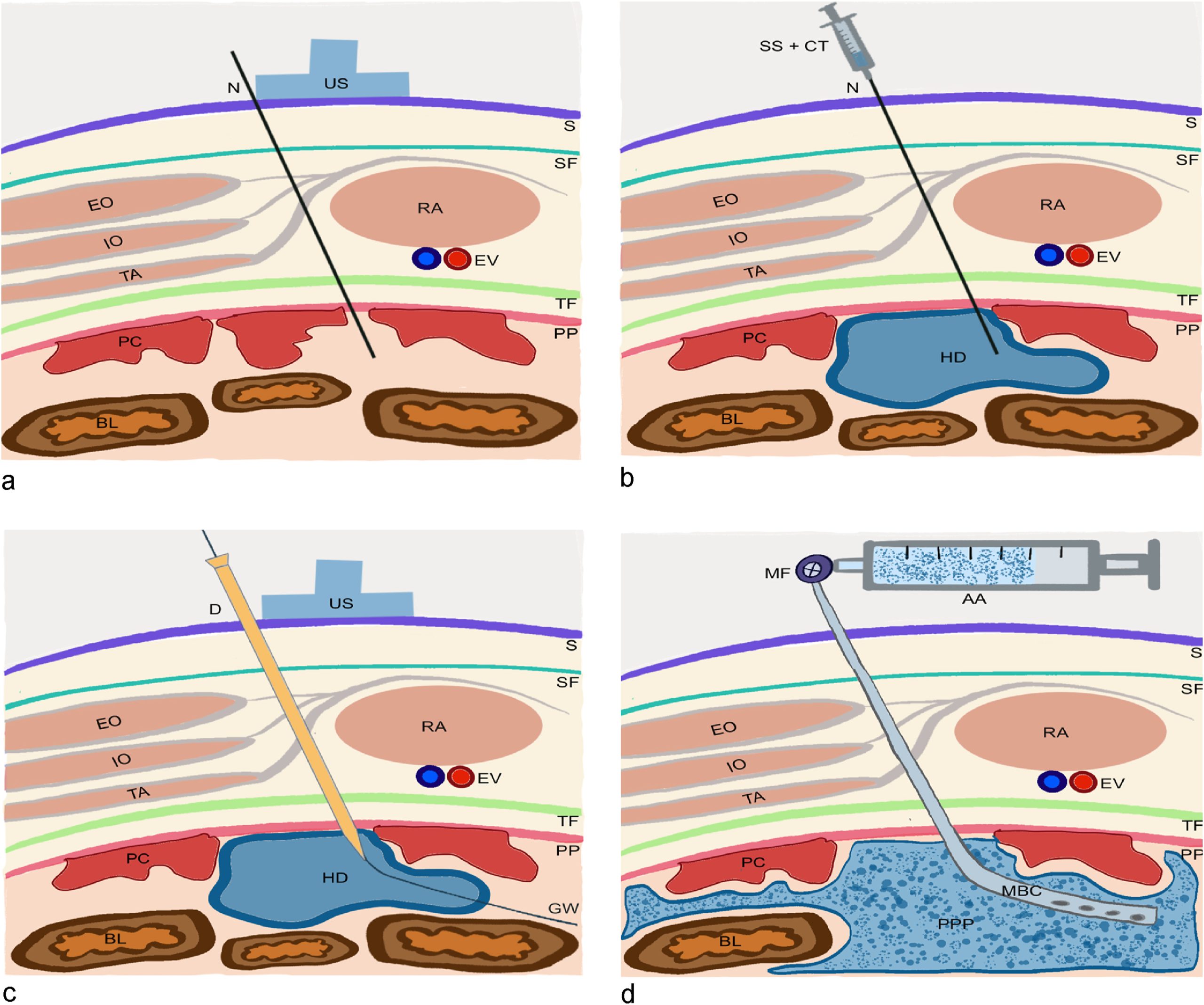
Preoperative progressive pneumoperitoneum (PPP) technique: schematic representation. (a) Ultrasound-guided insertion of a 21-gauge micropuncture needle through the abdominal wall, avoiding the epigastric vessels, peritoneal implants, and bowel loops. (b) Hydrodissection performed with a 10:1 mixture of 0.9% saline and iodinated contrast to create an artificial peritoneal chamber. (c) Sequential tract dilation over a guidewire. (d) Final placement of a multipurpose drainage catheter with an in-line bacterial filter, an initial volume of 100-200 mL of filtered ambient air is insufflated, followed by daily insufflation of 250-500 mL until an adequate pneumoperitoneum is achieved. Abbreviations: AA, ambient air; BL, bowel loops; CT, iodinated contrast; D, dilator; EO, external oblique muscle; EV, epigastric vasculature; GW, guidewire; HD, hydrodissection; IO, internal oblique muscle; MBC, multipurpose drainage catheter; MF, microbial filter; N, needle; PC, peritoneal carcinomatosis; PP, parietal peritoneum; RA, rectus abdominis muscle; S, skin; SF, Scarpa fascia; SS, saline solution; TA, transversus abdominis muscle; TF, transversalis fascia; US, ultrasound.

The problem it solves: The "non-accessible abdomen"

To administer PIPAC or ePIPAC chemotherapy, surgeons must access the abdomen via laparoscopy and insufflate gas to create a clear visualization chamber, allowing them to operate safely.

The risk of scarring

Approximately 4% to 5% of patients with peritoneal carcinomatosis present with severe adhesions (dense, rigid scar tissue that causes organs to stick to each other and to the abdominal wall) as a result of previous surgical interventions.

Treatment exclusion

This anatomical blockage creates a "non-accessible abdomen," making the introduction of surgical instruments (trocars) carry an unacceptable risk of bowel perforation. Until now, facing this situation meant automatic exclusion from targeted chemotherapy options, leaving these patients unable to benefit from PIPAC or ePIPAC.
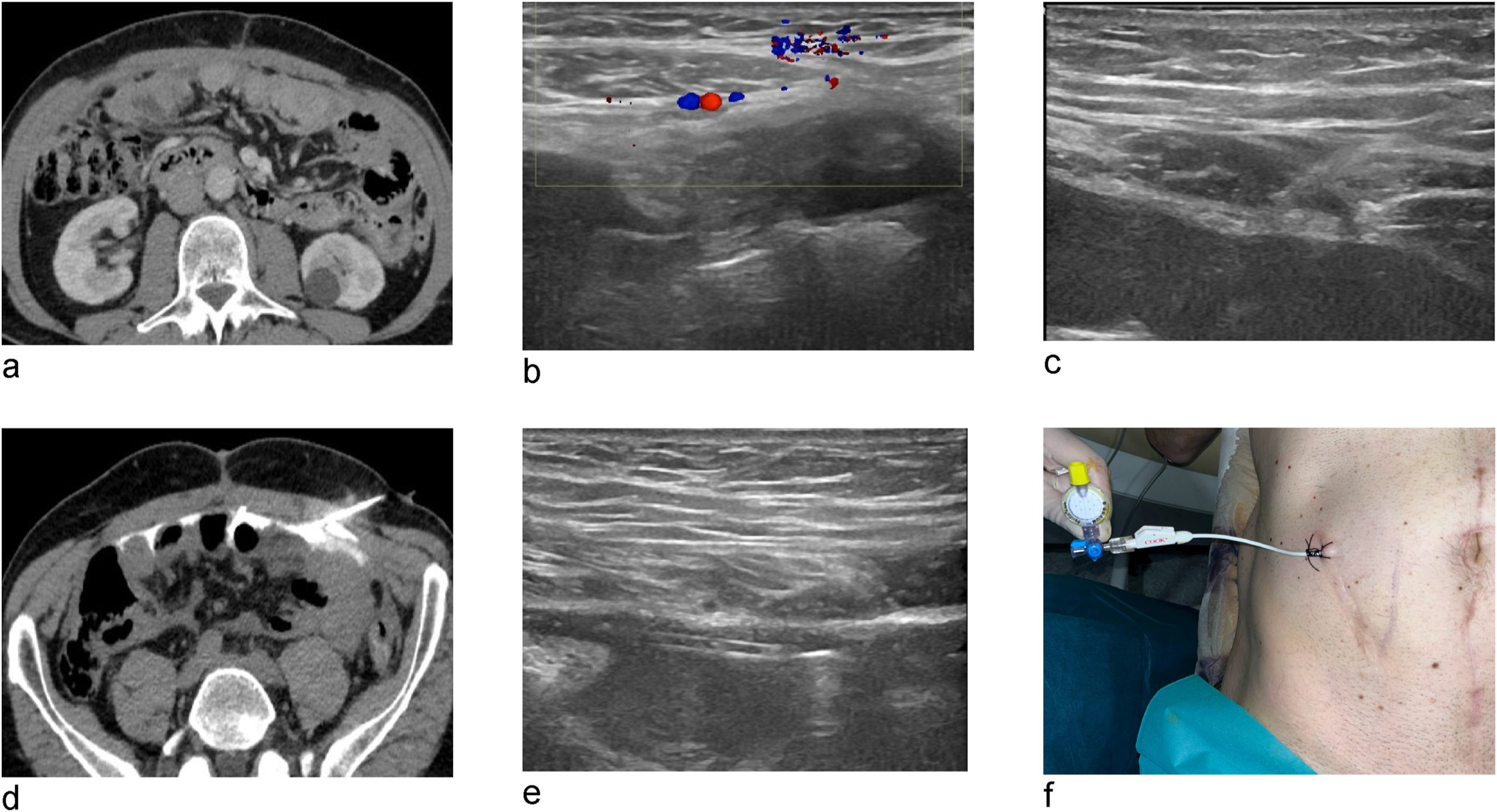
Image-guided preoperative progressive pneumoperitoneum (PPP) technique. Images from a 53-year-old male patient with extensive peritoneal disease secondary to epithelioid peritoneal mesothelioma. (a) Axial abdominal computed tomography (CT) demonstrating extensive peritoneal carcinomatosis, which precluded safe laparoscopic access. (b) High-frequency linear ultrasound (US) probe with color Doppler used to select the puncture site, avoiding the epigastric vessels and peritoneal implants. (c) Real-time US-guided insertion of a 21-gauge micropuncture needle; the needle tip is visualized traversing the transversalis fascia and parietal peritoneum. (d) Axial CT confirming successful hydrodissection using a 10:1 mixture of 0.9% saline and iodinated contrast, with controlled intraperitoneal contrast dispersion and no immediate complications. (e) US image demonstrating final placement of an 8.5-French multipurpose drainage catheter within the peritoneal cavity. (f) Clinical photograph showing the external portion of the catheter connected to a bacterial filter in the right hemiabdomen, for intermittent insufflation of filtered ambient air to achieve progressive pneumoperitoneum. (For interpretation of the references to color in this figure legend, the reader is referred to the Web version of this article.)

What is Preoperative Progressive Pneumoperitoneum (PPP)?

Preoperative Progressive Pneumoperitoneum (PPP) is a minimally invasive medical procedure that involves the gradual, intermittent, and controlled introduction of filtered air into the abdominal cavity over several days prior to surgery.

Traditionally, this technique has been utilized in general surgery for the repair of large, complex abdominal wall defects (hernias with loss of domain). In those cases, its primary function is to act as a tissue “expander,” naturally increasing the volume within the abdominal cavity.

The great innovation achieved by the IVOQA team has been to adapt this concept—for the very first time in worldwide medical literature—to facilitate safe surgical access for patients with advanced peritoneal cancer who were previously deemed ineligible for laparoscopy.

Step-by-Step Procedure

Microcatheter Placement (Day 1)

Sedation and Safety

The procedure is performed under propofol sedation and intravenous antibiotic prophylaxis to ensure the patient experiences no discomfort.

High-Resolution Ultrasound Guidance

Interventional radiologists identify the safest and most precise entry point on the abdominal wall in real time, strictly avoiding the epigastric blood vessels and tumor implants.

Protective Hydrodissection

A millimetric needle is introduced to inject a mixture of saline solution and contrast media. This fluid gently separates the tissue layers, creating a small, safe "artificial pocket" of approximately 100 mL.

Catheter Installation

A very fine drainage catheter (8.5 French) equipped with an antibacterial filter is positioned within this protected space. A minimal initial air volume of 100 to 200 mL is insufflated, and correct placement is confirmed via a control CT scan.

Progressive Insufflation (Days 2 to 7)

Gradual Expansion

Over a mean of 5.5 days (ranging from 4 to 7 days), 250 to 500 mL of filtered air is intermittently introduced through the catheter each day.

Target Volume

The process continues until an accumulated volume of 1 to 3 liters of air is reached, always tailored to the patient’s physical tolerance.

Clinical Evaluation

Medical staff assess the patient daily to monitor for any adverse symptoms, such as significant pain, respiratory distress, or nausea.

Final Confirmation

Once a minimum volume of 1 liter of air is reached, the patient is ready for surgery. On the day of the PIPAC procedure, a CT scan is performed to verify that the adhesions have elongated and that there is sufficient pneumatic space to operate with 100% safety.

100% Clinical Success Rate

In all patients treated at IVOQA who initially presented with a non-accessible abdomen, optimal and safe laparoscopic access was successfully achieved.

Therapeutic Guarantee

Thanks to the space gained through PPP, a total of 13 aerosol chemotherapy procedures (PIPAC and ePIPAC) were effectively delivered to individuals who previously had zero options to receive them.

Safety and Excellent Tolerance

No medical complications or adverse side effects of any grade were recorded from either catheter placement or air insufflation, proving to be an exceptionally safe and well-tolerated method for oncology patients.

Thanks to this multidisciplinary approach implemented at the Hospital Universitario Viamed Santa Elena, one of the most complex technical barriers in peritoneal surgical oncology has been broken, opening a real window of opportunity to resume advanced treatments when options seemed completely exhausted.

Frequently Asked Questions (FAQs)

Is the PPP procedure painful?

No. The placement of the microcatheter is performed under sedation and local anesthesia. Daily air insufflations are highly progressive and fully adjusted to the patient’s individual tolerance.

How long does it take to prepare the abdomen?

The process takes between 4 and 7 days. On the exact day of the aerosol chemotherapy, a CT scan is performed to confirm that the space created is optimal and safe for surgery.

Which patients are candidates for this technique?

It is indicated for patients with peritoneal carcinomatosis who are candidates for PIPAC but present with severe adhesions due to prior surgeries, provided they do not have symptoms of severe bowel obstruction.

Is there a risk of infection from the introduced air?

No. The ambient air is strictly introduced through a high-efficiency bacterial filter that guarantees the sterility of the entire process. The IVOQA study recorded zero infectious complications.

Would you like to schedule a consultation with our team?

If you are looking for a second opinion regarding advanced treatments for peritoneal cancer, contact Dr. Delia Cortés-Guiral’s team at IVOQA through our standard appointment channels.

Do not hesitate to request an appointment with our specialists

Dr. Rosa María Morera

Radiation Oncology

  • Specialist in Radiation Oncology.
  • Degree in Medicine and Surgery.  Faculty of Medicine, Complutense University of Madrid (2-8-1990).
  • Head of the Radiation Oncology Department, Hospital Universitario La Paz, Madrid.
  • Expert with university micro-credential mention in Physics, Technology and Protontherapy. King Juan Carlos University.
  • Higher University Course in Design and Management of Proton Therapy Centres. King Juan Carlos University.
  • XIX Programme of Senior Management in Health Institutions. IESE Business School. University of Navarra.
  • Master in Administration and Management of Health Services XXIV Edition (2013-2014). Pompeu Fabra University.
  • Doctoral Thesis Reading: ‘Radical thoracic irradiation and pulmonary functional study in patients with locally advanced non-small cell lung cancer. Systematic review and prospective case series’ . Qualification of outstanding ‘cum laude’.
  • Doctorate courses: Complutense University of Madrid (1995-1997).
  • She is a researcher in numerous clinical trials, publishing several national and international scientific articles.

Dr. Jose María Oliver

Breast radiology

  • Breast radiologist and specialist in cryoblation of breast lesions in the IVOQA Breast Unit.
  • Degree in Medicine and Surgery from the University of Navarra (1983-1989). Specialisation via MIR in Radiology. Number 289.
  • Specialist in radiology in several renowned hospitals, international reference and pioneer in the application of cryoablation to breast pathology in Spain.
  • Head of the Breast Radiology Section at the Hospital Universitario La Paz.
  • Member of the Spanish Society of Medical Radiology (SERAM) and the Spanish Society of Diagnostic Imaging (SEDIM).

Dr. Jesús Cañete Gómez

General and Digestive Surgery. Oncological Surgery

  • Graduate in Medicine and Surgery from the University of Seville (2000- 2006).
  • Specialist in colon and rectal cancer surgery using a minimally invasive approach.
  • Training in transanal rectal cancer treatment (TAMIS and TaTME).
    Training in minimally invasive surgery at Jackson Memorial Hospital (Miami).
  • Specialist in General Surgery at Viamed Fatima Hospital, Seville (currently).
  • Doctor of Medicine from the University of Seville (‘cum laude’).
  • Associate Professor at the University of Seville Founder of the surgical team Laparoscopic Surgery Seville – MISS (Minimally Invasive Surgical Solutions) – minimally invasive surgical techniques in scheduled and emergency surgery.
  • He has written numerous publications in journals and books and is a member of the Spanish Society of Obesity Surgery (SECO), as well as the Spanish Association of Surgeons (AEC) and the Andalusian Association of Surgeons (ASAC).

Dr. Juan José Segura Sampedro

General and digestive surgery. Oncological Surgery

  • Degree in Medicine and Surgery from the University of Seville. 2003-2009.
  • Specialist in peritoneal carinomatosis.
  • Doctor of Medicine from the University of Seville (‘cum laude’).
  • Oncological Surgeon in the Section of Peritoneal, Retroperitoneal and Soft Parts Oncological Surgery, Department of General and Digestive System Surgery, Hospital Universitario La Paz, Madrid.
  • Associate Professor of Surgery, Faculty of Medicine, University of the Balearic Islands, Palma de Mallorca.
  • 3IP in the Research Group in Advanced Oncological Surgery, m-Health and Innovation in Surgical Technology, Institute for Health Research of the Balearic Islands (IdISBa), Palma de Mallorca.
  • He has written numerous publications in journals and books and is a member of the Spanish Society of Surgical Oncology (SEOQ), the Spanish Society of Coloproctology (AECP), the Spanish Association of Surgeons (AEC), the European Society of Oncological Surgery (ESSO) and the Spanish Group of Peritoneal Oncological Surgery (GECOP).

Pablo Soto

Specialist in sports training for oncology patients

  • Higher Degree in Dietetics (2020-2022)
  • Treatment and rehabilitation of cancer patients

Dr. Gonzalez Larriba

Medical oncology

  • Professor of Medical Oncology at the Complutense University of Madrid
  • Head of the Medical Oncology Section of the Hospital Clínico San Carlos in possession of the European Certificate in Oncology
  • Recognition of 6 six-year research periods + 1 six-year period of knowledge transfer
  • Master in Oncology Services Management by the University of Alcala de Henares
  • Visiting Professor of Oncology at the University of Palermo (Italy)
  • Multiple stays in international centres (Memorial Sloan Kettering Cancer Center, Gustave Roussy Institute, University of Lyon, Princess Margaret Hospital in Toronto, University of Pittsburgh)
  • Maximum recognition of the Professional Career by the Regional Ministry of Health of the Community of Madrid
  • Director of the Master’s Degree in Genitourinary Tumours at the Complutense University of Madrid
  • Founder and member of the Board of Directors of the Spanish Lung Cancer Group, Spanish Genitourinary Tumour Group and Spanish Melanoma Group
  • Member of the Board of Directors of the Spanish Society of Medical Oncology
  • Miembro de la European Society of Medical Oncology, American Society of Clinical Oncology, International Association for the Study od Lung Cancer, etc.
  • Author of more than 300 scientific articles, 400 conference papers and 60 scientific books, as well as speaker in more than 400 conference papers

Francisco Flores

Physiotherapy

  • Graduate in physiotherapy. UEM.
  • Master’s degree in respiratory physiotherapy. UNIVERSITAT
  • ROVIRA i VIRGILI.
  • MASTER specialist in conservative and invasive physiotherapy of myofascial pain syndrome and fibromyalgia. UAH.
  • SPIROMETRIST by the ERS-SEPAR for the performance and interpretation of SPIROMETRY.
  • MASTER Specialist in intratissue percutaneous electrolysis treatments EPI.
  • Specialist in the use and application of the INDIBA ACTIV system.
  • MASTER Specialist in Biomechanical Analysis, Intervention and Treatment “Check yourMOtion”.
  • NATIONAL CLASSIFIER for athletes with cerebral palsy.
  • NATIONAL CLASSIFIER of athletics for people with physical disabilities.
  • RESEARCH PROJECT: “Respiratory physiotherapy as a treatment for ARVC in high performance athletes”.

Dr. Javier Heras Aznar

BREAST UNIT

  • Graduate in Medicine and Surgery from Universidad Autonoma de Madrid 1992.
  • Specialist via MIR in Family Medicine at Hospital Universitario Ramón y Cajal 1994-1996.
  • Specialist via MIR in OBSTETRICS AND GYNECOLOGY at Hospital Universitario Santa Cristina in Madrid 1997-2001.
  • Specialized in the last 27 years in Gynecological Oncology and Breast Pathology, both malignant and benign, with experience in Oncoplastic Surgery.
  • Specialization Course in Oncoplastic Breast Surgery 2015.
  • Coordinator of the Breast Unit and the Breast Tumors and Gynecology Oncology Committee in Hospital Universitario Infanta Sofía.
  • Main Author of the Breast Unit Accreditation Project (Hospital Universitario Infanta Sofía) 2019-2020.

Dr. Beatriz García-Conde

DIGESTIVE SYSTEM MEDICINE

  • Graduate in Medicine and Surgery.
  • MIR specialisation in Digestive System Medicine, Puerta de Hierro University Hospital in Majadahonda. Currently working at the 12 de Octubre University Hospital.
  • Specialist in capsule endoscopy and in diagnostic and therapeutic endoscopy: chromoendoscopy, colon cancer screening, digestive dilatations, PEG placement, endoluminal vacuum therapy (fistulas/leaks), polypectomy/mucosectomy.
  • She also a general digestive consultant with a Master’s Degree in Neurogastroenterology.

Dr. Micaela Riat Castro Zocchi

DIGESTIVE SYSTEM MEDICINE

  • Graduate in Medicine and Surgery.
  • MIR specialisation in Digestive System Medicine, Princesa Hospital (Madrid).
  • Clinical consultation. Diagnostic and therapeutic endoscopy: Chromoendoscopy, Colon Cancer Screening, Placement of digestive prosthesis (oesophagus, colon), Digestive dilatations, PEG Placement, Endoluminal Vacuum Therapy (fistulas/leaks), Polypectomy/mucosectomy. Experience in Bariatric Endoscopy: Intragastric balloon.

Dr. Diana Fresneda Cuesta

DIGESTIVE SYSTEM MEDICINE

  • Graduate in Medicine and Surgery.
  • MIR specialisation in Digestive System Medicine, Jiménez Díaz Foundation. (Madrid)
  • Clinical consultation. Specialist in Endoscopic Capsule and in Diagnostic and Therapeutic Endoscopy: Chromoendoscopy, Colon Cancer Screening, Ligation of Oesophagus Varices, Placement of digestive prosthesis (oesophagus, colon), Digestive dilatations, PEG Placement, Endoluminal Vacuum Therapy (fistulas/leaks), Polypectomy/mucosectomy. Experience in bariatric endoscopy: intragastric balloon, POSE method and Endo-sleeve with POSE system, etc.

Dr. Teresa Valdés Lacasa

DIGESTIVE SYSTEM MEDICINE

  • Graduate in Medicine and Surgery
  • MIR specialisation in Digestive System Medicine, 12 de Octubre University Hospital (Madrid). Advanced Endoscopy Fellowship (ERCP and digestive prostheses) at Ninewells Hospital (United Kingdom). 2020-2021.
  • Clinical consultation and abdominal ultrasound.
  • Specialist in pancreatico-biliary conditions and therapeutic endoscopy: ERCP, placement of digestive prostheses (oesophagus, duodenum, colon, biliary), digestive dilatations, placement of PEGs, endoluminal vacuum therapy (fistulas/leaks), polypectomy/mucosectomy.

Dr. Andrés J. del Pozo García, MD. PhD.

DUAL SPECIALISATION IN DIGESTIVE SYSTEM MEDICINE / FAMILY AND COMMUNITY MEDICINE

  • Graduate in Medicine and Surgery.
  • Dual specialised training (MIR) at the Princesa University Hospital (Madrid).
  • Specialist in Digestive System Medicine and Specialised in Family and Community Medicine
  • PhD in Medicine from the Autonomous University of Madrid. Cum Laude. 2020.
  • Member of S.E.P.D, S.E.E.D., A.E.G, E.S.G.E, AESPANC, Board Member of GETTEMO; Consultant of Apollo Endosurgery in 2021.

Dr. José María Abadal Villayandre

SPECIALIST IN VASCULAR INTERVENTIONAL RADIOLOGY

  • Graduate in Medicine and Surgery from Navarra University.
  • MIR specialisation in Radiology, Radiodiagnosis at Gregorio Marañón University Hospital.
  • PhD in Radiodiagnosis from the Complutense University of Madrid. Cum Laude Doctoral Thesis.
  • Specialist in Vascular Interventional Radiology, accreditation from the Spanish Society of Interventional Radiology.
  • European Board Interventional Radiology (EBIR) Health Sciences) at Alfonso X el Sabio University. 2010-2014.
  • Medical Director of the “Centro de Radiología y Diagnóstico por Imagen”.
  • Scientific and research activity with numerous publications and research studies.
  • Director and professor of Interventional Vascular Radiology at the I-XI Endo-school. Teaching activity.
  • Member of SERAM (Spanish Society of Medical Radiology), CIRSE (Cardiovascular Interventional Radiology Society Europe), and Secretary of SERVEI (Spanish Society of Interventional Vascular Radiology).

Belén Pérez Peiro. Psychologist

SPECIALIST IN PSYCHO-ONCOLOGY

  • Graduate in Psychology
  • Clinical psychologist, Gregorio Marañón University General Hospital, Psycho-oncology, Gynaecological Psychology, Neuropsychology, Detoxification and Out-patient Hospital, inflammatory bowel disease and teenagers.
  • Clinical activity at the Niño Jesús Children’s University Hospital, Psychiatric and Eating Disorder Units.
  • Expert qualification in Psychosomatic Medicine and Health Psychology.
  • Expert qualification in Psychopathology and Psychiatry from the Spanish Society of Psychosomatic Medicine and Medical Psychology.
  • Specialist qualification in Psychotherapy and projective techniques, both of which are recognised by the Madrid Official Association of Psychologists.

Dr. Ana María Moreno

SPECIALIST IN INTERNAL MEDICINE AND NUTRITIONAL PREHABILITATION

  • Graduate in Medicine and Surgery. 1986– 1992.
  • Extraordinary Graduation Award. 1992.
  • MIR specialisation in Internal Medicine. Number 283.
  • Master’s Degree in Palliative Care from Valladolid University. 2011.
  • University Master’s Degree in Advanced Chronic Nursing and palliative care from Antonio de Nebrija University. 2017.
  • PhD Courses 1993.
  • Extensive professional career in many renowned hospitals.
  • Head of Internal Medicine Services at Viamed Santa Elena (Madrid). September 2021 – Present.
  • Teaching and research work.
  • Numerous publications and papers. Participation in courses and seminars.