
An ePIPAC, a minimally invasive technique for patients with peritoneal carcinomatosis, is performed for the first time in Spain.
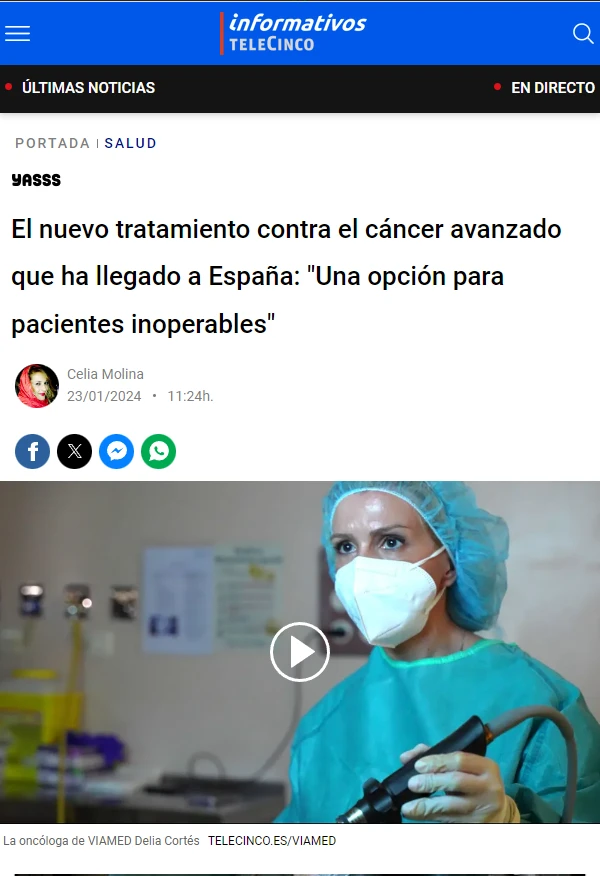
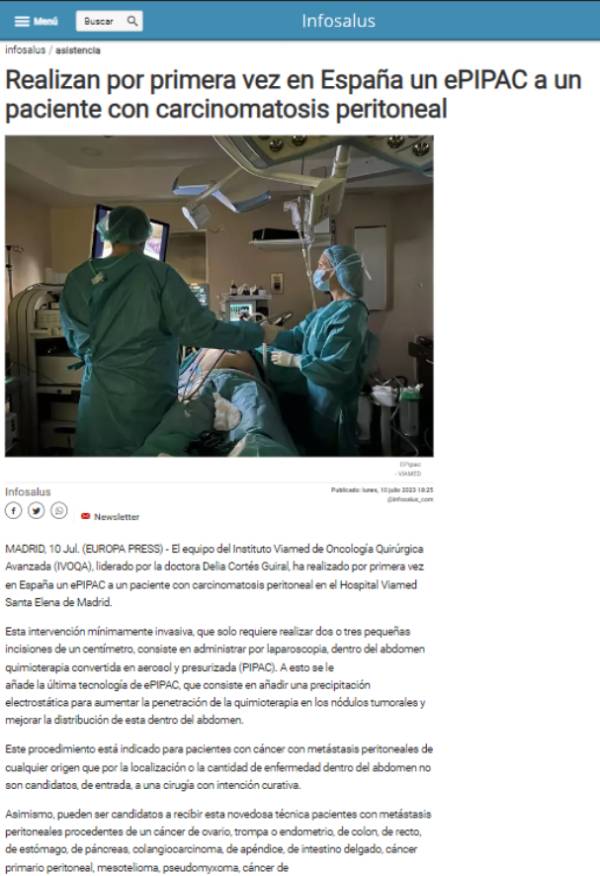
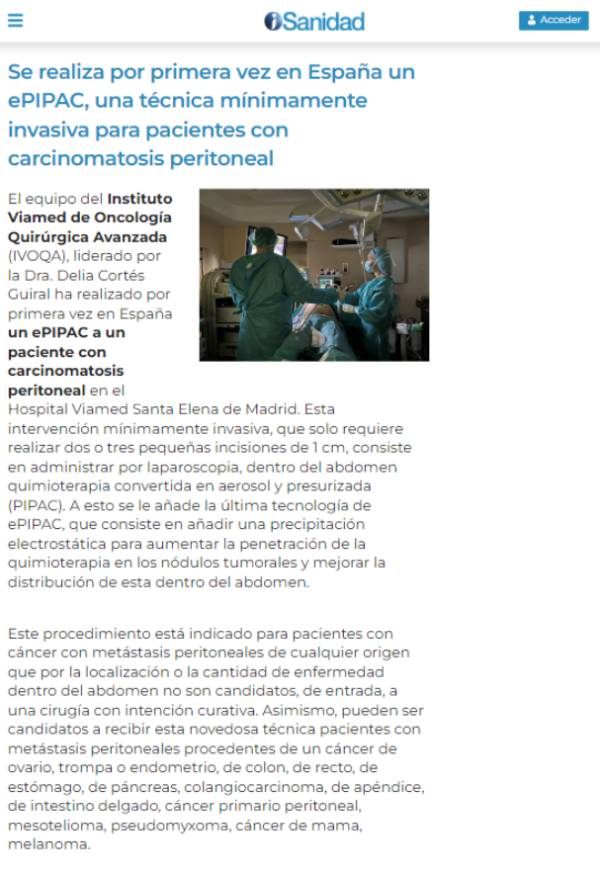
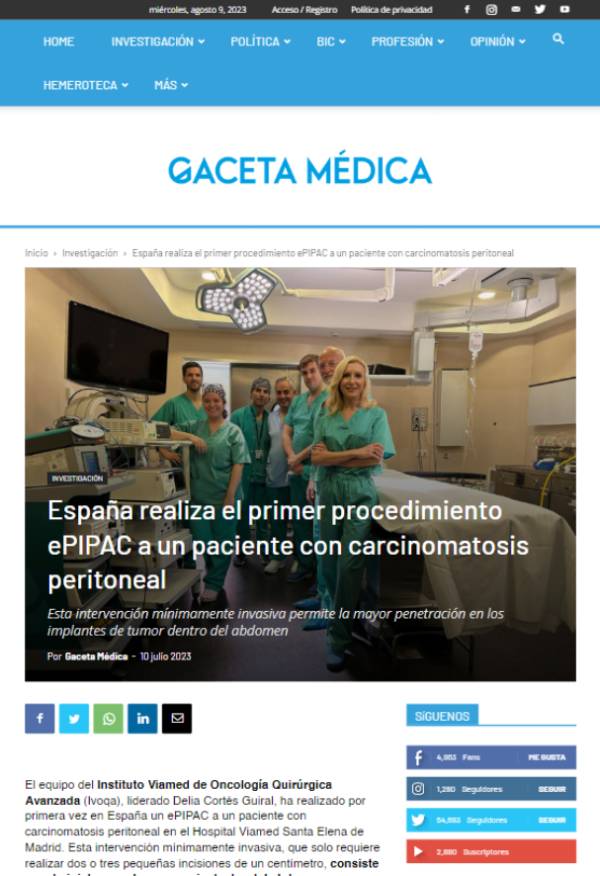
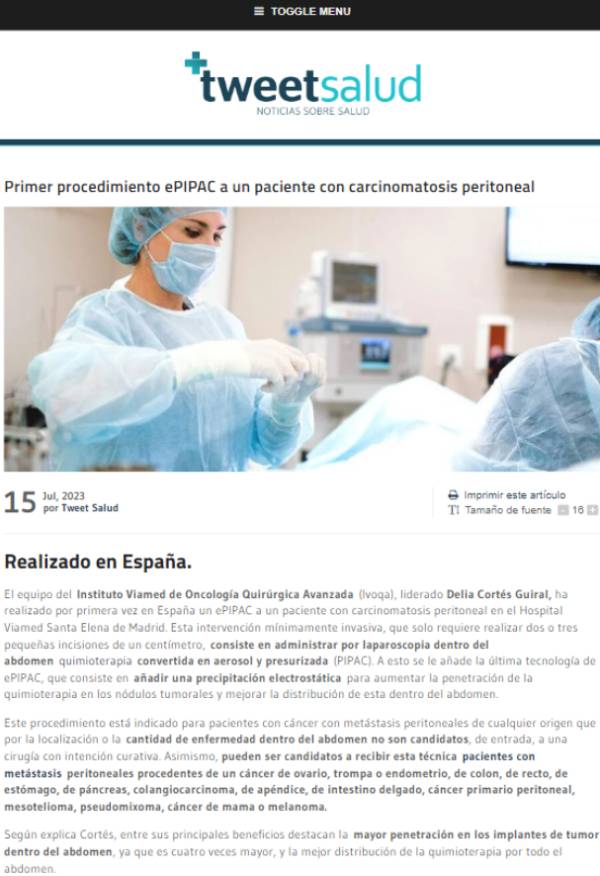
Madrid, July 10, 2023. The team from the Viamed Institute of Advanced Surgical Oncology (IVOQA), led by Dr. Delia Cortés Guiral performed an ePIPAC for the first time in Spain on a patient with peritoneal carcinomatosis at the Viamed Santa Elena Hospital in Madrid. IVOQA is the only center in Spain that offers this state-of-the-art treatment for patients with malignant peritoneal disease.
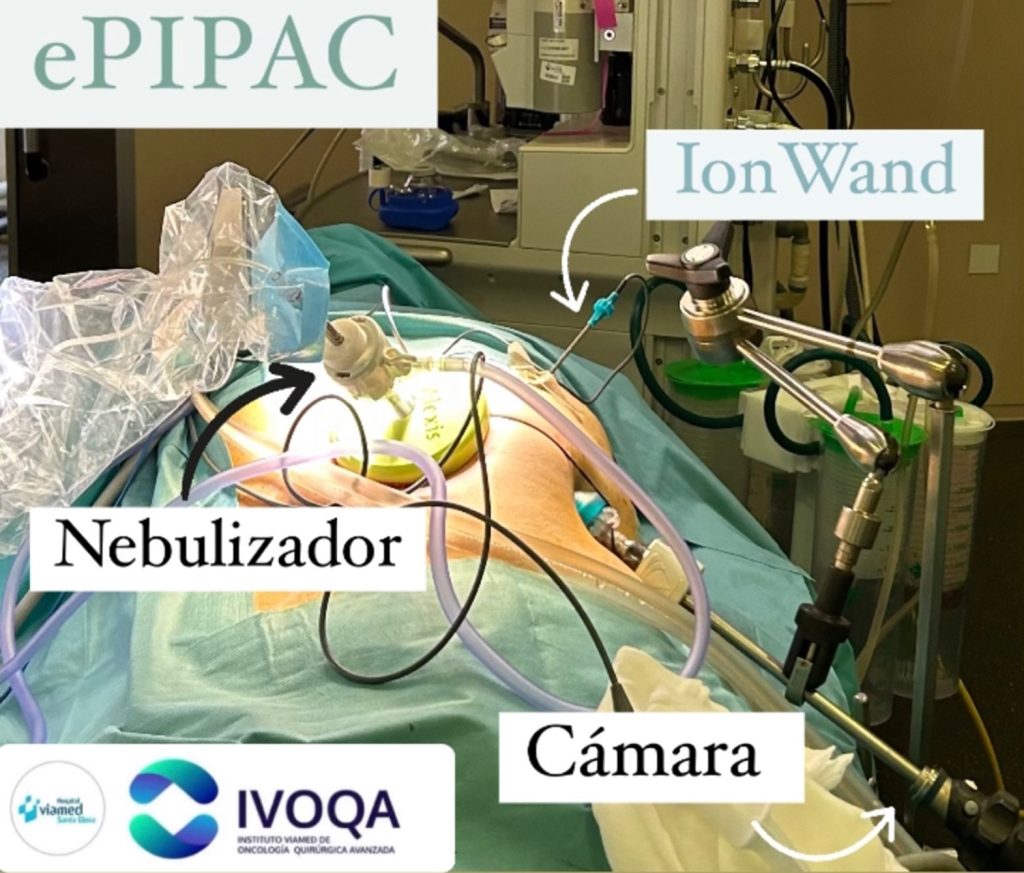
This minimally invasive surgery, which only requires two or three small 1 cm incisions, consists of a laparoscopy for delivering pressurized aerosolized chemotherapy (PIPAC) into the abdomen. In addition to this is the latest ePIPAC technology, which consists of adding electrostatic precipitation to increase the penetration of chemotherapy into tumor nodules and improve its distribution within the abdomen.
This procedure is indicated for cancer patients with peritoneal metastases of any origin who, due to the location or amount of disease within the abdomen, are not candidates, from the outset, for a surgery with curative intent (cytoreductive surgery and HIPEC)
Likewise, patients with peritoneal metastases from ovarian, fallopian or endometrial, colon, rectal, stomach, pancreatic, cholangiocarcinoma, appendix, small intestine, primary peritoneal cancer, primary peritoneal cancer, mesothelioma, pseudomyxoma, breast cancer, melanoma may be candidates for this new technique.
As explained by Dr. Cortés, among the main benefits of this direct administration in the form of a pressurized aerosol and with electrostatic discharge, it must be highlighted, the deeper penetration of the chemotherapy in the tumor nodules since it is four times deeper than with PIPAC, and the improved distribution of chemotherapy throughout the abdomen, reaching more homogeneously the whole abdomen instead of remaining the largest amount of chemotherapy in front of the nebulizer.
“This is really interesting because thanks to an electrode we can charge, negatively ionize the gas and a plate let the patient’s tissues, in this case the peritoneum, to remain positively charged. The result of all this is that the aerosol chemotherapy negatively charged is attracted to the tumor nodules (positively charged) and to every corner of the abdomen, going a step beyond the benefits of the conventional PIPAC technique”, points out the specialist.
In addition, ePIPAC makes it possible to shorten surgical time and the patient is usually discharged 24 hours after the intervention.
“It is a safe technique, with a very low number of complications and similar to those of the conventional PIPAC technique, the most frequent and not very serious being abdominal discomfort that subsides in the hours following the procedure, since the chemotherapy remains acting in the peritoneum and in tumor nodules, so systemic effects are marginal”

IVOQA is the most active PIPAC center in Spain and they are leaders in personalized medicine for patients with advanced cancer.

"Carrying out this intervention for the first time means for us to continue advancing in our commitment to make the most advanced techniques for the treatment of cancer patients accessible in Spain," says Dr. Delia Cortés Guiral

To which she adds that “ePIPAC is available in Switzerland, Germany and France and now in Spain as a treatment option for patients with advanced cancer thanks to IVOQA”.