
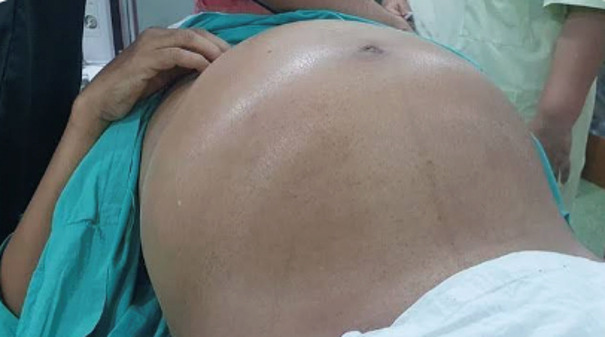

Ascites in Oncology Patients
Malignant ascites is the abnormal accumulation of fluid within the abdominal cavity resulting from the progression of certain tumors. It is a common complication in patients with peritoneal carcinomatosis and can cause a significant decline in their quality of life.
At IVOQA, the advanced surgical oncology institute at Viamed Santa Elena University Hospital, we have a dedicated unit for the management of malignant ascites. We address this condition through a multidisciplinary approach and advanced intraperitoneal therapies aimed not only at relieving symptoms but also at controlling the peritoneal disease responsible for its onset.
Malignant ascites consists of the progressive accumulation of fluid in the peritoneal space—the membrane that lines the abdominal organs. It usually appears in the advanced stages of some tumors and can cause symptoms such as:

Fatigue

Shortness of breath (dyspnea)

Abdominal distension

Sensation of heaviness or pressure

Abdominal pain

Early satiety or loss of appetite

Difficulty walking and moving
The presence of ascites does not always imply the same prognosis or biological behavior, as it depends on the type of tumor and the extent of the disease.
The most frequent cause is peritoneal carcinomatosis, meaning the spread of tumor cells across the peritoneum. This involvement disrupts the normal balance between the production and drainage of abdominal fluid.
The formation of ascites occurs through several combined mechanisms:
Today we know that ascites is not merely “accumulated fluid,” but rather an active tumor microenvironment that promotes disease progression. It can contain free tumor cells, inflammatory cytokines, pro-angiogenic factors, and immunosuppressive cells that facilitate tumor growth.
Malignant ascites appears most commonly in gynecological and digestive tumors, especially in:
Between 30% and 50% of patients with peritoneal carcinomatosis present with ascites at the time of diagnosis.
Furthermore, not all malignant ascites are the same. In some patients, portal hypertension or liver involvement associated with the tumor may coexist, requiring a different management strategy.
Treatment depends on the type of tumor, the patient’s general health status, and the response to systemic therapy.
When ascites causes significant symptoms, the first step is usually to evacuate the fluid to relieve abdominal pressure and improve patient well-being.
Options include:

Removal of fluid via needle puncture.

These allow for longer-term control of ascites and reduce the risk of leaks and infections. In our unit, we utilize tunneled drains equipped with a valve mechanism to prevent infections. Our interventional radiologists perform this placement.

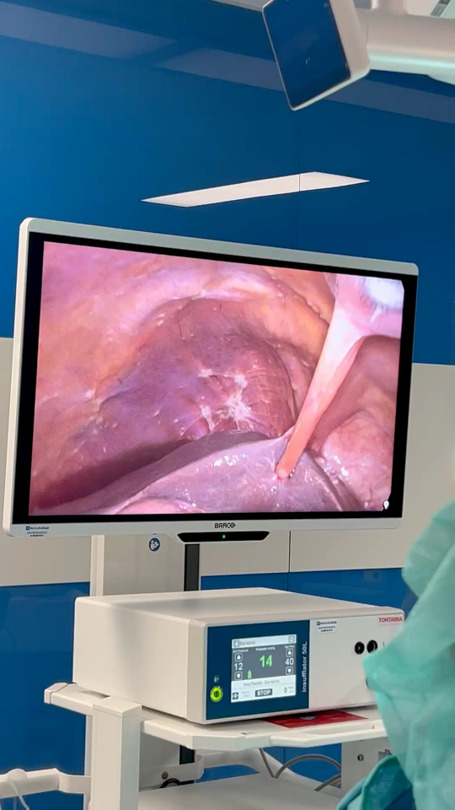
This procedure allows for fluid evacuation, biopsy collection, assessment of disease extent, and the placement of a tunneled drain under direct vision. Our surgical oncology team performs this intervention.

Particularly useful for fragile patients or those with loculated ascites.
In recent years, intraperitoneal therapies have changed the approach to malignant ascites that is refractory to systemic treatment.

PIPAC (Pressurized Intraperitoneal Aerosol Chemotherapy) is a minimally invasive technique that administers chemotherapy into the abdomen as a pressurized aerosol via laparoscopy.
This system allows for:
PIPAC can be combined with systemic chemotherapy and has shown promising results in selected gastric, colorectal, and ovarian tumors.

At IVOQA, we also offer ePIPAC technology, an evolution of conventional PIPAC that incorporates an electrostatic field to promote a more homogeneous distribution of chemotherapy microparticles throughout the peritoneum.
This technology optimizes treatment deposition while maintaining an appropriate safety profile.

In addition to PIPAC, there are strategies such as NIPS (Normothermic Intraperitoneal Chemotherapy), which administers intraperitoneal chemotherapy through permanent or subcutaneous catheters and can be used in specific, selected patients. It is an excellent option for frail patients and has significant clinical evidence in gastric cancer. In our specialized “NIPS” unit, patients receive this treatment comfortably; it requires no anesthesia or sedation and is performed in the day hospital.

The appearance of ascites indicates advanced disease, but today there are strategies available that can significantly improve quality of life and allow oncological treatments to continue.
A multidisciplinary approach in specialized units, proper drainage control, and the use of advanced intraperitoneal therapies make it possible to offer therapeutic alternatives to patients who, until a few years ago, only had access to palliative measures.
If you would like a specialized evaluation regarding peritoneal carcinomatosis, malignant ascites, or advanced intraperitoneal therapies, Dr. Delia Cortés Guiral’s team at IVOQA can help you explore the most appropriate therapeutic options for your case.
The majority of our patients receive their intravenous oncology treatment at their reference hospital (in other cities) and travel to Madrid for their intraperitoneal treatments. PIPAC treatment is performed every 6 to 8 weeks, and NIPS is administered one day a week for 3 weeks a month, followed by a rest week.
Mainly ovarian, stomach, colon, rectal, appendix, and pancreatic tumors, especially when peritoneal carcinomatosis is present.
No. Although it is usually associated with advanced disease, the prognosis depends on the type of tumor, the response to systemic treatment, and the therapeutic options available for each individual patient.
PIPAC acts directly on the peritoneal tumor implants responsible for fluid production, helping to reduce ascites and improve symptoms.
No. Each case must be evaluated individually by a multidisciplinary team specialized in peritoneal oncology. Factors such as the patient’s general health, tumor extent, or the presence of bowel obstruction are decisive in patient selection.
They provide more stable and comfortable control of ascites, decrease the need for repeated punctures, and reduce certain associated complications, such as infections or fluid leaks.
Yes. Many of our patients continue their oncological treatment at their primary hospital and come to IVOQA specifically for the specialized assessment and management of malignant ascites and peritoneal malignancies.