



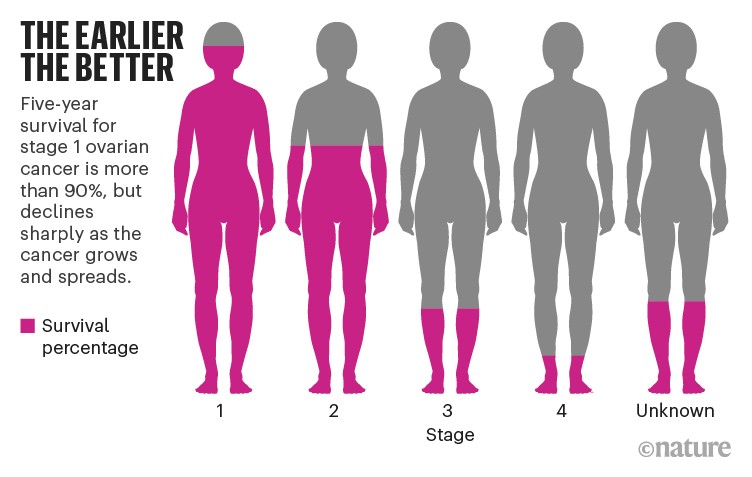
Early diagnosis of ovarian cancer represents a major health challenge, as around 70% of cases are detected at advanced stages, with peritoneal or lymph node metastasis.
Annual gynecological checkups, or when symptoms appear, are essential for identifying the disease in its early stages, when the prognosis is significantly better. This article analyzes the most relevant clinical aspects of ovarian cancer and the tools available for its diagnostic evaluation.
What is ovarian cancer and why is early diagnosis key?
Ovarian cancer encompasses various tumor subtypes that affect the ovaries, glands responsible for producing eggs and hormones such as estrogen and progesterone. Early detection is crucial to improving treatment options and overall prognosis.
Main types of ovarian cancer
The clinical approach depends on the histological subtype. The main types are:
- Epithelial carcinoma: this is the most common type (approximately 90% of cases) and originates in the cells that line the ovary.
- Germ cell tumors: these affect the cells responsible for forming eggs; they are less common and are usually diagnosed in young patients.
- Stromal tumors: these develop in the tissue that supports the ovary and produces hormones; they tend to progress more slowly.
Early detection and warning signs
In its early stages, ovarian cancer may be asymptomatic or present with nonspecific clinical manifestations. Some warning signs include:
- Persistent abdominal bloating or swelling.
- Pelvic or abdominal pain.
- Changes in bowel or urinary habits.
- Prolonged fatigue or unexplained weight loss.
The persistence of these symptoms (for several weeks) warrants consultation with a gynecologist or gynecological oncologist, especially in patients with a family history of gynecological cancer.
Most common diagnostic tools
Transvaginal ultrasound
This is a first-line imaging technique that allows ovarian and pelvic structures to be visualized. It is used to evaluate masses, cysts, or morphological abnormalities.
Serum tumor markers
- CA-125: the most commonly used marker, although it is not specific. It may be elevated for other benign reasons (endometriosis, menstruation, pelvic inflammation).
- HE4 and ROMA index: improve diagnostic sensitivity and specificity when combined with CA-125.
Complementary imaging techniques
- Abdominal and pelvic CT scan: provides detailed anatomical information and helps to stage the disease.
- Magnetic resonance imaging: useful in complex cases or when better characterization of the lesions is required, as it provides information not only on size but also on the behavior of the lesion, allowing for better guidance on its benignity or malignancy.
- PET-CT: allows assessment of the extent of the neoplastic process and detection of hidden metastases.
Biopsy and diagnostic surgery
When a suspicious mass is identified, surgery may be necessary to obtain a tissue sample. Histological confirmation of the tumor subtype and its degree of differentiation is essential to define the therapeutic strategy.
Interpretation of results: clinical context and multidisciplinarity
An elevated tumor marker does not automatically mean a diagnosis of cancer. Laboratory and imaging results must be evaluated in conjunction with the patient’s medical history, family history, and physical examination. The evaluation should be performed by a team specializing in gynecologic oncology, preferably in a multidisciplinary setting.
What happens after the diagnosis is confirmed?
Once the diagnosis is confirmed, the case is referred to a specialized tumor board. Treatment may include:
- Oncological surgery
- Adjuvant or neoadjuvant chemotherapy
- Targeted therapies, such as PARP inhibitors, in certain molecular profiles.
- Targeted therapies such as Bevacizumab
- Hormone therapy
- Cytoreductive surgery with/without HIPEC (hyperthermic intraperitoneal chemotherapy).
- PIPAC: pressurized intraperitoneal aerosol chemotherapy.
Treatment planning is individualized according to the stage, histological subtype, and general condition of the patient.
Psycho-emotional support and available resources
A cancer diagnosis can have a significant emotional impact.
At IVOQA, we offer psychological support from the beginning of the process and throughout treatment. We have specialized professionals and support groups that provide emotional support during treatment.
We also offer guidance on how to communicate the diagnosis to family and friends, always respecting the pace and needs of each patient.
Ovarian cancer poses clinical challenges that require a comprehensive approach based on early detection, accurate diagnosis, and multidisciplinary care.
At IVOQA, we combine experience in oncological surgery with a patient-centered approach: with scientific rigor, closeness, and respect for each individual process.


