

VIAMED INSTITUTE OF ADVANCED SURGICAL ONCOLOGY


Ascites in Oncology Patients

Why Does It Occur and How Is It Treated?

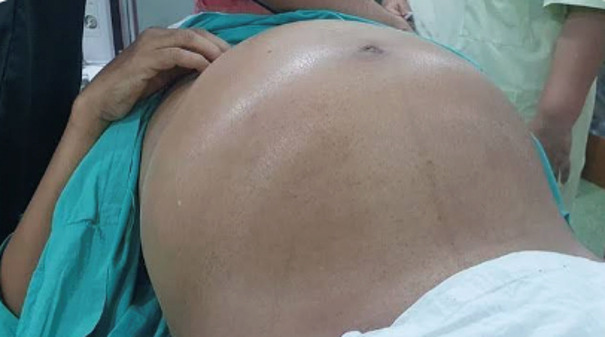
Malignant ascites is the abnormal accumulation of fluid within the abdominal cavity resulting from the progression of certain tumors. It is a common complication in patients with peritoneal carcinomatosis and can cause a significant decline in their quality of life.

At IVOQA, the advanced surgical oncology institute at Viamed Santa Elena University Hospital, we have a dedicated unit for the management of malignant ascites. We address this condition through a multidisciplinary approach and advanced intraperitoneal therapies aimed not only at relieving symptoms but also at controlling the peritoneal disease responsible for its onset.

What Is Malignant Ascites?

Malignant ascites consists of the progressive accumulation of fluid in the peritoneal space—the membrane that lines the abdominal organs. It usually appears in the advanced stages of some tumors and can cause symptoms such as:

Fatigue

Shortness of breath (dyspnea)

Abdominal distension

Sensation of heaviness or pressure

Abdominal pain

Early satiety or loss of appetite

Difficulty walking and moving
The presence of ascites does not always imply the same prognosis or biological behavior, as it depends on the type of tumor and the extent of the disease.

Why Does Ascites Occur in Cancer?

The most frequent cause is peritoneal carcinomatosis, meaning the spread of tumor cells across the peritoneum. This involvement disrupts the normal balance between the production and drainage of abdominal fluid.

The formation of ascites occurs through several combined mechanisms:

  • Increased permeability of blood vessels due to factors released by the tumor, such as VEGF.
  • Obstruction of lymphatic drainage in the abdomen.
  • Inflammation of the peritoneal tumor microenvironment.
  • Active fluid production by tumor cells.
  • Significant involvement of drainage areas for peritoneal fluid, such as the diaphragmatic peritoneum and the omentum.

Today we know that ascites is not merely “accumulated fluid,” but rather an active tumor microenvironment that promotes disease progression. It can contain free tumor cells, inflammatory cytokines, pro-angiogenic factors, and immunosuppressive cells that facilitate tumor growth.

Which Tumors Most Frequently Produce Ascites?

Malignant ascites appears most commonly in gynecological and digestive tumors, especially in:

Ovarian cancer

Appendix tumors

Appendix tumors

Peritoneal mesothelioma

Between 30% and 50% of patients with peritoneal carcinomatosis present with ascites at the time of diagnosis.

Furthermore, not all malignant ascites are the same. In some patients, portal hypertension or liver involvement associated with the tumor may coexist, requiring a different management strategy.

How Is Malignant Ascites Treated?

Treatment depends on the type of tumor, the patient’s general health status, and the response to systemic therapy.

Ascites Drainage

When ascites causes significant symptoms, the first step is usually to evacuate the fluid to relieve abdominal pressure and improve patient well-being.

Options include:

Therapeutic paracentesis

Removal of fluid via needle puncture.

Tunneled drains

These allow for longer-term control of ascites and reduce the risk of leaks and infections. In our unit, we utilize tunneled drains equipped with a valve mechanism to prevent infections. Our interventional radiologists perform this placement.

Laparoscopy

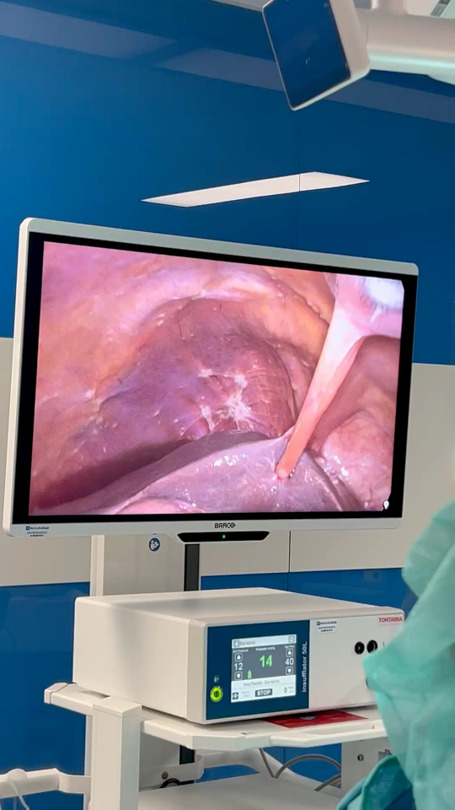
This procedure allows for fluid evacuation, biopsy collection, assessment of disease extent, and the placement of a tunneled drain under direct vision. Our surgical oncology team performs this intervention.

Interventional Radiology

Particularly useful for fragile patients or those with loculated ascites.

Advanced Intraperitoneal Therapies: PIPAC, ePIPAC, and NIPS

In recent years, intraperitoneal therapies have changed the approach to malignant ascites that is refractory to systemic treatment.

PIPAC

PIPAC (Pressurized Intraperitoneal Aerosol Chemotherapy) is a minimally invasive technique that administers chemotherapy into the abdomen as a pressurized aerosol via laparoscopy.

This system allows for:

  • Better drug distribution throughout the peritoneum.
  • Deeper penetration into the tumor tissue.
  • Lower systemic toxicity due to the use of reduced doses.
  • Local control of peritoneal disease and ascites production.

PIPAC can be combined with systemic chemotherapy and has shown promising results in selected gastric, colorectal, and ovarian tumors.

ePIPAC

At IVOQA, we also offer ePIPAC technology, an evolution of conventional PIPAC that incorporates an electrostatic field to promote a more homogeneous distribution of chemotherapy microparticles throughout the peritoneum.

This technology optimizes treatment deposition while maintaining an appropriate safety profile.

NIPS (Normothermic Intraperitoneal Chemotherapy)

In addition to PIPAC, there are strategies such as NIPS (Normothermic Intraperitoneal Chemotherapy), which administers intraperitoneal chemotherapy through permanent or subcutaneous catheters and can be used in specific, selected patients. It is an excellent option for frail patients and has significant clinical evidence in gastric cancer. In our specialized “NIPS” unit, patients receive this treatment comfortably; it requires no anesthesia or sedation and is performed in the day hospital.

Ascites Is Not the End

The appearance of ascites indicates advanced disease, but today there are strategies available that can significantly improve quality of life and allow oncological treatments to continue.

A multidisciplinary approach in specialized units, proper drainage control, and the use of advanced intraperitoneal therapies make it possible to offer therapeutic alternatives to patients who, until a few years ago, only had access to palliative measures.

If you would like a specialized evaluation regarding peritoneal carcinomatosis, malignant ascites, or advanced intraperitoneal therapies, Dr. Delia Cortés Guiral’s team at IVOQA can help you explore the most appropriate therapeutic options for your case.

Frequently Asked Questions (FAQs)

If I am receiving treatment at another hospital that does not have a PIPAC or NIPS unit, how can I benefit from these treatments?

The majority of our patients receive their intravenous oncology treatment at their reference hospital (in other cities) and travel to Madrid for their intraperitoneal treatments. PIPAC treatment is performed every 6 to 8 weeks, and NIPS is administered one day a week for 3 weeks a month, followed by a rest week.

What types of cancer most frequently produce ascites?

Mainly ovarian, stomach, colon, rectal, appendix, and pancreatic tumors, especially when peritoneal carcinomatosis is present.

Does ascites always mean terminal illness?

No. Although it is usually associated with advanced disease, the prognosis depends on the type of tumor, the response to systemic treatment, and the therapeutic options available for each individual patient.

How does PIPAC help control ascites?

PIPAC acts directly on the peritoneal tumor implants responsible for fluid production, helping to reduce ascites and improve symptoms.

Can all patients receive PIPAC or ePIPAC?

No. Each case must be evaluated individually by a multidisciplinary team specialized in peritoneal oncology. Factors such as the patient’s general health, tumor extent, or the presence of bowel obstruction are decisive in patient selection.

What advantages do tunneled drains have over repeated paracentesis?

They provide more stable and comfortable control of ascites, decrease the need for repeated punctures, and reduce certain associated complications, such as infections or fluid leaks.

If I have malignant ascites and am being treated at another hospital, can I receive treatment at IVOQA?

Yes. Many of our patients continue their oncological treatment at their primary hospital and come to IVOQA specifically for the specialized assessment and management of malignant ascites and peritoneal malignancies.

Do not hesitate to request an appointment with our specialists

Dr. Rosa María Morera

Radiation Oncology

  • Specialist in Radiation Oncology.
  • Degree in Medicine and Surgery.  Faculty of Medicine, Complutense University of Madrid (2-8-1990).
  • Head of the Radiation Oncology Department, Hospital Universitario La Paz, Madrid.
  • Expert with university micro-credential mention in Physics, Technology and Protontherapy. King Juan Carlos University.
  • Higher University Course in Design and Management of Proton Therapy Centres. King Juan Carlos University.
  • XIX Programme of Senior Management in Health Institutions. IESE Business School. University of Navarra.
  • Master in Administration and Management of Health Services XXIV Edition (2013-2014). Pompeu Fabra University.
  • Doctoral Thesis Reading: ‘Radical thoracic irradiation and pulmonary functional study in patients with locally advanced non-small cell lung cancer. Systematic review and prospective case series’ . Qualification of outstanding ‘cum laude’.
  • Doctorate courses: Complutense University of Madrid (1995-1997).
  • She is a researcher in numerous clinical trials, publishing several national and international scientific articles.

Dr. Jose María Oliver

Breast radiology

  • Breast radiologist and specialist in cryoblation of breast lesions in the IVOQA Breast Unit.
  • Degree in Medicine and Surgery from the University of Navarra (1983-1989). Specialisation via MIR in Radiology. Number 289.
  • Specialist in radiology in several renowned hospitals, international reference and pioneer in the application of cryoablation to breast pathology in Spain.
  • Head of the Breast Radiology Section at the Hospital Universitario La Paz.
  • Member of the Spanish Society of Medical Radiology (SERAM) and the Spanish Society of Diagnostic Imaging (SEDIM).

Dr. Jesús Cañete Gómez

General and Digestive Surgery. Oncological Surgery

  • Graduate in Medicine and Surgery from the University of Seville (2000- 2006).
  • Specialist in colon and rectal cancer surgery using a minimally invasive approach.
  • Training in transanal rectal cancer treatment (TAMIS and TaTME).
    Training in minimally invasive surgery at Jackson Memorial Hospital (Miami).
  • Specialist in General Surgery at Viamed Fatima Hospital, Seville (currently).
  • Doctor of Medicine from the University of Seville (‘cum laude’).
  • Associate Professor at the University of Seville Founder of the surgical team Laparoscopic Surgery Seville – MISS (Minimally Invasive Surgical Solutions) – minimally invasive surgical techniques in scheduled and emergency surgery.
  • He has written numerous publications in journals and books and is a member of the Spanish Society of Obesity Surgery (SECO), as well as the Spanish Association of Surgeons (AEC) and the Andalusian Association of Surgeons (ASAC).

Dr. Juan José Segura Sampedro

General and digestive surgery. Oncological Surgery

  • Degree in Medicine and Surgery from the University of Seville. 2003-2009.
  • Specialist in peritoneal carinomatosis.
  • Doctor of Medicine from the University of Seville (‘cum laude’).
  • Oncological Surgeon in the Section of Peritoneal, Retroperitoneal and Soft Parts Oncological Surgery, Department of General and Digestive System Surgery, Hospital Universitario La Paz, Madrid.
  • Associate Professor of Surgery, Faculty of Medicine, University of the Balearic Islands, Palma de Mallorca.
  • 3IP in the Research Group in Advanced Oncological Surgery, m-Health and Innovation in Surgical Technology, Institute for Health Research of the Balearic Islands (IdISBa), Palma de Mallorca.
  • He has written numerous publications in journals and books and is a member of the Spanish Society of Surgical Oncology (SEOQ), the Spanish Society of Coloproctology (AECP), the Spanish Association of Surgeons (AEC), the European Society of Oncological Surgery (ESSO) and the Spanish Group of Peritoneal Oncological Surgery (GECOP).

Pablo Soto

Specialist in sports training for oncology patients

  • Higher Degree in Dietetics (2020-2022)
  • Treatment and rehabilitation of cancer patients

Dr. Gonzalez Larriba

Medical oncology

  • Professor of Medical Oncology at the Complutense University of Madrid
  • Head of the Medical Oncology Section of the Hospital Clínico San Carlos in possession of the European Certificate in Oncology
  • Recognition of 6 six-year research periods + 1 six-year period of knowledge transfer
  • Master in Oncology Services Management by the University of Alcala de Henares
  • Visiting Professor of Oncology at the University of Palermo (Italy)
  • Multiple stays in international centres (Memorial Sloan Kettering Cancer Center, Gustave Roussy Institute, University of Lyon, Princess Margaret Hospital in Toronto, University of Pittsburgh)
  • Maximum recognition of the Professional Career by the Regional Ministry of Health of the Community of Madrid
  • Director of the Master’s Degree in Genitourinary Tumours at the Complutense University of Madrid
  • Founder and member of the Board of Directors of the Spanish Lung Cancer Group, Spanish Genitourinary Tumour Group and Spanish Melanoma Group
  • Member of the Board of Directors of the Spanish Society of Medical Oncology
  • Miembro de la European Society of Medical Oncology, American Society of Clinical Oncology, International Association for the Study od Lung Cancer, etc.
  • Author of more than 300 scientific articles, 400 conference papers and 60 scientific books, as well as speaker in more than 400 conference papers

Francisco Flores

Physiotherapy

  • Graduate in physiotherapy. UEM.
  • Master’s degree in respiratory physiotherapy. UNIVERSITAT
  • ROVIRA i VIRGILI.
  • MASTER specialist in conservative and invasive physiotherapy of myofascial pain syndrome and fibromyalgia. UAH.
  • SPIROMETRIST by the ERS-SEPAR for the performance and interpretation of SPIROMETRY.
  • MASTER Specialist in intratissue percutaneous electrolysis treatments EPI.
  • Specialist in the use and application of the INDIBA ACTIV system.
  • MASTER Specialist in Biomechanical Analysis, Intervention and Treatment “Check yourMOtion”.
  • NATIONAL CLASSIFIER for athletes with cerebral palsy.
  • NATIONAL CLASSIFIER of athletics for people with physical disabilities.
  • RESEARCH PROJECT: “Respiratory physiotherapy as a treatment for ARVC in high performance athletes”.

Dr. Javier Heras Aznar

BREAST UNIT

  • Graduate in Medicine and Surgery from Universidad Autonoma de Madrid 1992.
  • Specialist via MIR in Family Medicine at Hospital Universitario Ramón y Cajal 1994-1996.
  • Specialist via MIR in OBSTETRICS AND GYNECOLOGY at Hospital Universitario Santa Cristina in Madrid 1997-2001.
  • Specialized in the last 27 years in Gynecological Oncology and Breast Pathology, both malignant and benign, with experience in Oncoplastic Surgery.
  • Specialization Course in Oncoplastic Breast Surgery 2015.
  • Coordinator of the Breast Unit and the Breast Tumors and Gynecology Oncology Committee in Hospital Universitario Infanta Sofía.
  • Main Author of the Breast Unit Accreditation Project (Hospital Universitario Infanta Sofía) 2019-2020.

Dr. Beatriz García-Conde

DIGESTIVE SYSTEM MEDICINE

  • Graduate in Medicine and Surgery.
  • MIR specialisation in Digestive System Medicine, Puerta de Hierro University Hospital in Majadahonda. Currently working at the 12 de Octubre University Hospital.
  • Specialist in capsule endoscopy and in diagnostic and therapeutic endoscopy: chromoendoscopy, colon cancer screening, digestive dilatations, PEG placement, endoluminal vacuum therapy (fistulas/leaks), polypectomy/mucosectomy.
  • She also a general digestive consultant with a Master’s Degree in Neurogastroenterology.

Dr. Micaela Riat Castro Zocchi

DIGESTIVE SYSTEM MEDICINE

  • Graduate in Medicine and Surgery.
  • MIR specialisation in Digestive System Medicine, Princesa Hospital (Madrid).
  • Clinical consultation. Diagnostic and therapeutic endoscopy: Chromoendoscopy, Colon Cancer Screening, Placement of digestive prosthesis (oesophagus, colon), Digestive dilatations, PEG Placement, Endoluminal Vacuum Therapy (fistulas/leaks), Polypectomy/mucosectomy. Experience in Bariatric Endoscopy: Intragastric balloon.

Dr. Diana Fresneda Cuesta

DIGESTIVE SYSTEM MEDICINE

  • Graduate in Medicine and Surgery.
  • MIR specialisation in Digestive System Medicine, Jiménez Díaz Foundation. (Madrid)
  • Clinical consultation. Specialist in Endoscopic Capsule and in Diagnostic and Therapeutic Endoscopy: Chromoendoscopy, Colon Cancer Screening, Ligation of Oesophagus Varices, Placement of digestive prosthesis (oesophagus, colon), Digestive dilatations, PEG Placement, Endoluminal Vacuum Therapy (fistulas/leaks), Polypectomy/mucosectomy. Experience in bariatric endoscopy: intragastric balloon, POSE method and Endo-sleeve with POSE system, etc.

Dr. Teresa Valdés Lacasa

DIGESTIVE SYSTEM MEDICINE

  • Graduate in Medicine and Surgery
  • MIR specialisation in Digestive System Medicine, 12 de Octubre University Hospital (Madrid). Advanced Endoscopy Fellowship (ERCP and digestive prostheses) at Ninewells Hospital (United Kingdom). 2020-2021.
  • Clinical consultation and abdominal ultrasound.
  • Specialist in pancreatico-biliary conditions and therapeutic endoscopy: ERCP, placement of digestive prostheses (oesophagus, duodenum, colon, biliary), digestive dilatations, placement of PEGs, endoluminal vacuum therapy (fistulas/leaks), polypectomy/mucosectomy.

Dr. Andrés J. del Pozo García, MD. PhD.

DUAL SPECIALISATION IN DIGESTIVE SYSTEM MEDICINE / FAMILY AND COMMUNITY MEDICINE

  • Graduate in Medicine and Surgery.
  • Dual specialised training (MIR) at the Princesa University Hospital (Madrid).
  • Specialist in Digestive System Medicine and Specialised in Family and Community Medicine
  • PhD in Medicine from the Autonomous University of Madrid. Cum Laude. 2020.
  • Member of S.E.P.D, S.E.E.D., A.E.G, E.S.G.E, AESPANC, Board Member of GETTEMO; Consultant of Apollo Endosurgery in 2021.

Dr. José María Abadal Villayandre

SPECIALIST IN VASCULAR INTERVENTIONAL RADIOLOGY

  • Graduate in Medicine and Surgery from Navarra University.
  • MIR specialisation in Radiology, Radiodiagnosis at Gregorio Marañón University Hospital.
  • PhD in Radiodiagnosis from the Complutense University of Madrid. Cum Laude Doctoral Thesis.
  • Specialist in Vascular Interventional Radiology, accreditation from the Spanish Society of Interventional Radiology.
  • European Board Interventional Radiology (EBIR) Health Sciences) at Alfonso X el Sabio University. 2010-2014.
  • Medical Director of the “Centro de Radiología y Diagnóstico por Imagen”.
  • Scientific and research activity with numerous publications and research studies.
  • Director and professor of Interventional Vascular Radiology at the I-XI Endo-school. Teaching activity.
  • Member of SERAM (Spanish Society of Medical Radiology), CIRSE (Cardiovascular Interventional Radiology Society Europe), and Secretary of SERVEI (Spanish Society of Interventional Vascular Radiology).

Belén Pérez Peiro. Psychologist

SPECIALIST IN PSYCHO-ONCOLOGY

  • Graduate in Psychology
  • Clinical psychologist, Gregorio Marañón University General Hospital, Psycho-oncology, Gynaecological Psychology, Neuropsychology, Detoxification and Out-patient Hospital, inflammatory bowel disease and teenagers.
  • Clinical activity at the Niño Jesús Children’s University Hospital, Psychiatric and Eating Disorder Units.
  • Expert qualification in Psychosomatic Medicine and Health Psychology.
  • Expert qualification in Psychopathology and Psychiatry from the Spanish Society of Psychosomatic Medicine and Medical Psychology.
  • Specialist qualification in Psychotherapy and projective techniques, both of which are recognised by the Madrid Official Association of Psychologists.

Dr. Ana María Moreno

SPECIALIST IN INTERNAL MEDICINE AND NUTRITIONAL PREHABILITATION

  • Graduate in Medicine and Surgery. 1986– 1992.
  • Extraordinary Graduation Award. 1992.
  • MIR specialisation in Internal Medicine. Number 283.
  • Master’s Degree in Palliative Care from Valladolid University. 2011.
  • University Master’s Degree in Advanced Chronic Nursing and palliative care from Antonio de Nebrija University. 2017.
  • PhD Courses 1993.
  • Extensive professional career in many renowned hospitals.
  • Head of Internal Medicine Services at Viamed Santa Elena (Madrid). September 2021 – Present.
  • Teaching and research work.
  • Numerous publications and papers. Participation in courses and seminars.