


Receiving a diagnosis of peritoneal carcinomatosis represents a major challenge for patients and their families. Fortunately, advances in surgical oncology now make it possible to offer highly effective localized treatments. However, a subset of patients who have undergone multiple previous abdominal surgeries often face an unexpected obstacle: the so-called “hostile” or “inaccessible abdomen.”
To address this clinical challenge, the team at the Advanced Oncology Institute (IVOQA) at Viamed Santa Elena University Hospital has developed a pioneering strategy on a global scale.
A Scientific Achievement Published in the European Journal of Surgical Oncology
The multidisciplinary team at IVOQA, led by Dr. Delia Cortés-Guiral, has reached a milestone of international significance. A prospective clinical study co-led by our center was accepted and published in the prestigious European Journal of Surgical Oncology (EJSO) in 2026.
The research demonstrates the success of an innovative surgical strategy designed to treat patients with advanced peritoneal cancer who had previously been considered ineligible for treatment at other centers due to the lack of safe surgical access for localized chemotherapy delivery.
The Clinical Challenge: What Is an “Inaccessible Abdomen”?
Pressurized Intraperitoneal Aerosol Chemotherapy (PIPAC), as well as its electrostatic evolution (ePIPAC), is administered directly into the abdominal cavity through minimally invasive laparoscopy. To perform the procedure, surgeons must insert laparoscopic instruments and insufflate gas to create a working space within the abdomen. However, approximately 4% to 5% of patients present with what is known as an “inaccessible abdomen.”
Why does this happen? Previous abdominal surgeries often result in multiple internal adhesions—dense scar tissue that causes organs to stick together. These adhesions eliminate the free space required inside the abdomen, making laparoscopic access extremely difficult and increasing the risk of injury to vital organs. Until now, patients with this condition were typically excluded from receiving PIPAC treatment altogether.
IVOQA’s Innovation: Preoperative Progressive Pneumoperitoneum (PPP)
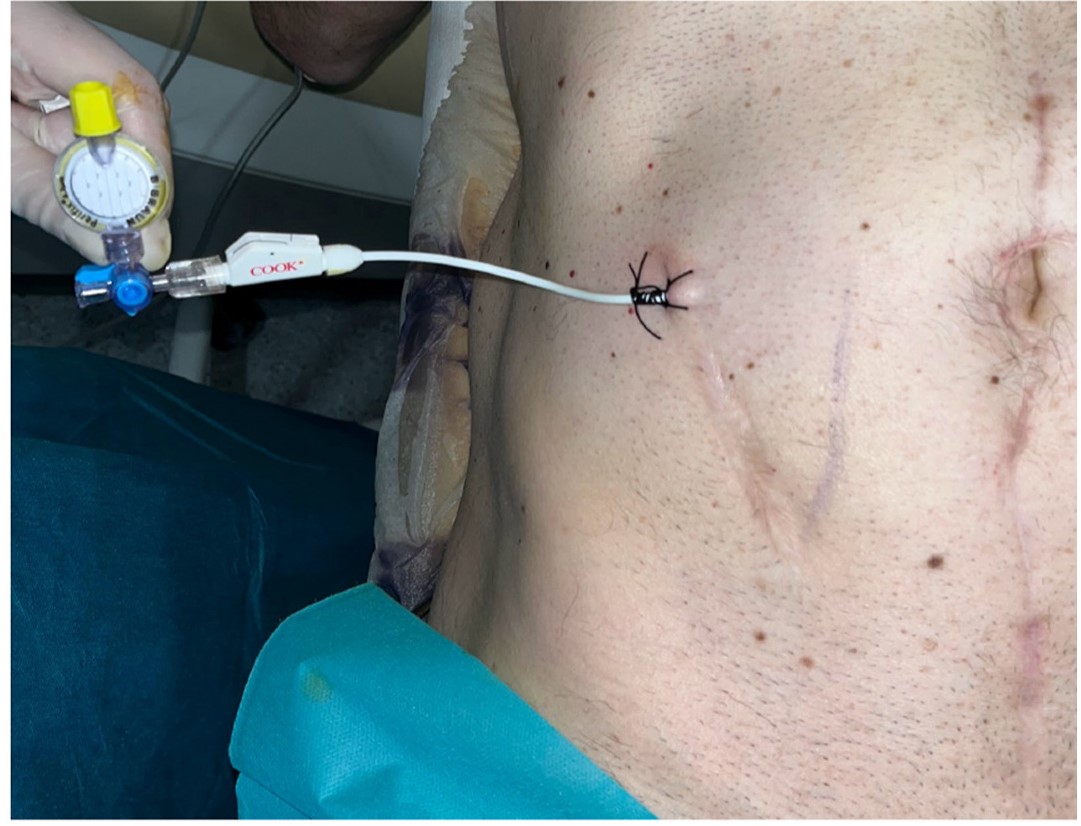
To overcome this longstanding barrier, IVOQA adapted and refined a technique traditionally used in the management of complex hernias: Ultrasound-Guided Preoperative Progressive Pneumoperitoneum (PPP) combined with hydrodissection. Rather than forcing surgical entry, the procedure gradually prepares the abdominal cavity in the days leading up to treatment.
- High-Precision Ultrasound Guidance: Using real-time ultrasound and color Doppler imaging, physicians identify the safest entry point in the abdominal wall while avoiding tumor implants and blood vessels.
- Safety Through Hydrodissection: A fine needle is used to inject a small amount of saline solution and contrast medium, gently separating internal tissues and creating a protective artificial space of approximately 100 mL.
- Gradual Pneumatic Expansion: A microcatheter fitted with a bacterial filter is placed to allow the controlled and intermittent insufflation of filtered air, typically between 250 and 500 mL per day, over an average period of 5.5 days. The air acts as a natural tissue expander, gradually stretching the abdominal wall and elongating adhesions in a painless and controlled manner.
Study Results: 100% Success and Outstanding Safety
The clinical trial conducted at Viamed Santa Elena University Hospital produced remarkable results with significant implications for the medical community.
- Complete Clinical Success (100%): Every patient initially classified as having an inaccessible abdomen was successfully converted into a candidate for safe laparoscopic access.
- Access to Treatment Restored: Following PPP preparation, a total of 13 PIPAC and ePIPAC procedures were successfully administered to patients who previously had no remaining treatment options.
- Excellent Safety and Tolerability: No patient experienced complications of any grade or adverse events related to the technique during the 30-day follow-up period, demonstrating that the procedure is highly safe and well tolerated.
Request an Expert Assessment
The publication of this scientific milestone reinforces the commitment of Viamed Santa Elena University Hospital and IVOQA to innovation, excellence, and patient-centered care.
If you or a loved one would like a second medical opinion regarding advanced treatments for peritoneal carcinomatosis, you can contact Dr. Delia Cortés-Guiral’s team at IVOQA through our standard appointment channels.


