

NIPS: Normothermic Intraperitoneal Chemotherapy
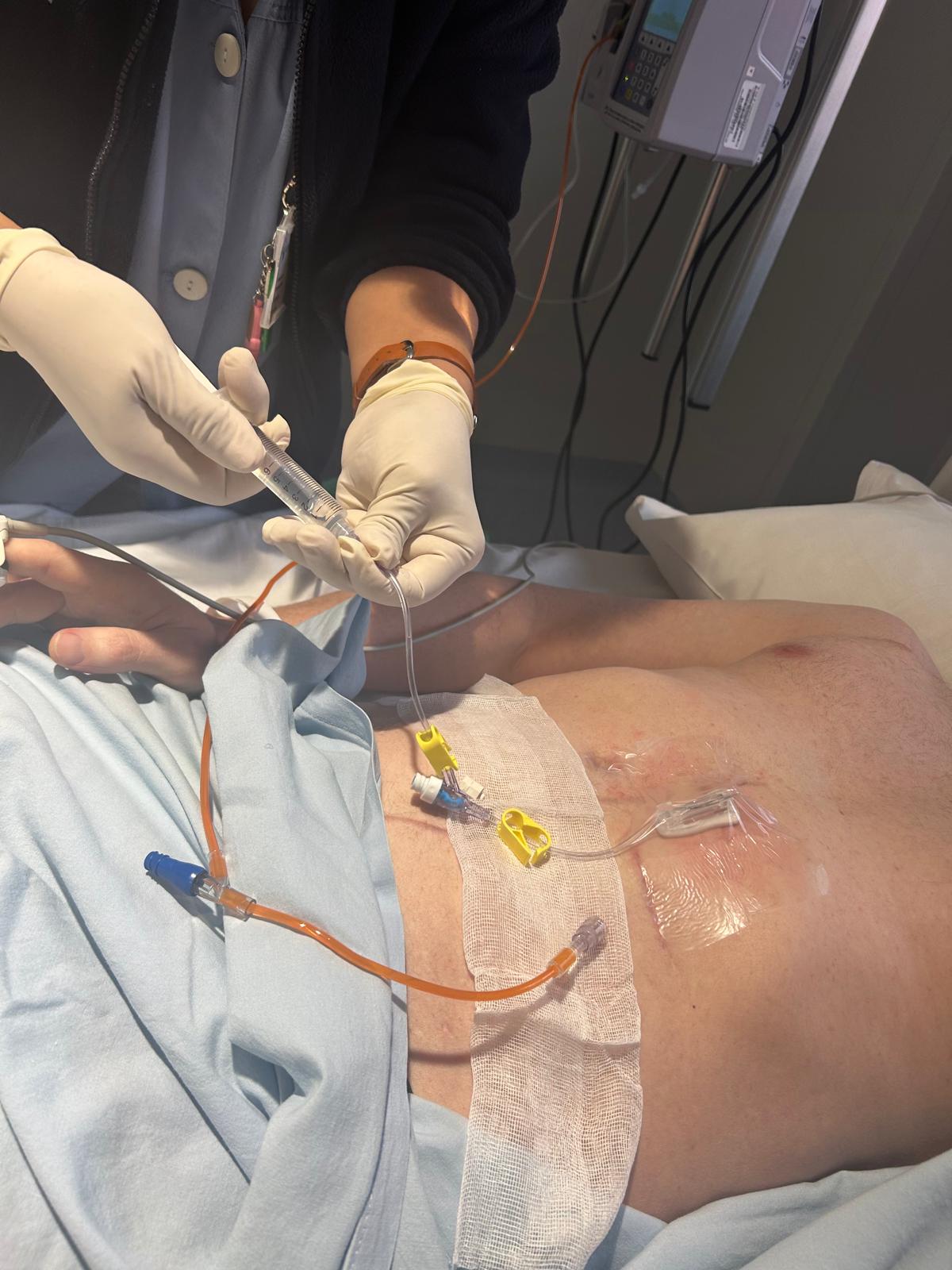
Normothermic Intraperitoneal Chemotherapy, commonly known as NIPEC or NIPS (Normothermic Intraperitoneal Chemotherapy), represents an advanced pillar in the treatment of peritoneal carcinomatosis. This technique involves administering cytostatic drugs at body temperature (37°C) directly into the abdominal cavity via a catheter implanted in the abdomen, similar to the ports used for intravenous chemotherapy.
Unlike other single-dose procedures, NIPS is designed for prolonged and repeated treatments, allowing sustained contact between the drug and the tumor cells. This is exceptionally valuable for patients who require ongoing control of microscopic disease or as a conversion therapy prior to major surgery. In fact, in Japan, some patients receive NIPS treatment continuously for years.
The NIPEC procedure is based on the physiological principle of the blood-peritoneum barrier. This barrier allows for much higher doses of chemotherapy to be applied inside the abdomen than could ever be tolerated intravenously, as the drug barely passes into the bloodstream. Consequently, systemic side effects are reduced while the therapy acts directly on the peritoneal metastases.
Unlike HIPEC, which is performed during surgery under general anesthesia, NIPS is typically administered as follows:

A peritoneal access device (similar to an abdominal port-a-cath) is placed either through a minimally invasive procedure performed under sedation by interventional radiologists or in the operating room via laparoscopy by surgical oncologists. This catheter remains hidden beneath the skin of the abdomen.

The drug is infused at normal body temperature without applying heat, eliminating thermal stress on the tissues. It is carried out in the day hospital while the patient is awake—much like standard intravenous chemotherapy—making it comfortable and very well tolerated.

The patient receives multiple scheduled sessions (cycles), allowing the chemotherapy to target tumor cells at different stages of their growth cycle. Typically, intraperitoneal chemotherapy is administered one day a week for three consecutive weeks each month, followed by a rest week.

By protocol, it is most commonly combined with conventional intravenous chemotherapy. This attacks the tumor from two fronts simultaneously to maximize efficacy.
It is common for patients to wonder which technique is most appropriate for their case. While all three act on the peritoneum, their objectives and methods differ significantly:
| Feature | HIPEC | PIPAC | NIPEC (NIPS) |
|---|---|---|---|
| Temperature | Hyperthermic (40–43°C) | Normothermic (Room Temp) | Normothermic (37°C) |
| Administration | Single dose following cytoreductive surgery | Pressurized aerosol (via Laparoscopy) | Liquid solution via catheter |
| Frequency | Once per surgery | Cycles (every 6–8 weeks) | Cycles (one day a week for 3 weeks per month, with 1 rest week) |
| Primary Objective | Eliminate microscopic disease after removing the visible tumor. | Palliation or conversion in inoperable cases. | Palliation or conversion in inoperable cases. |
| Thermal Stress | High (enhances drug penetration). | None. | None (ideal for long-term treatments). |
| Indication | Patients with resectable peritoneal carcinomatosis who are candidates for cytoreductive surgery. | Patients with unresectable peritoneal carcinomatosis who are not candidates for cytoreductive surgery due to disease extent or location. | Patients with unresectable peritoneal carcinomatosis who are not candidates for cytoreductive surgery due to disease extent or location. |
While HIPEC provides an immediate, one-time treatment following complex cytoreductive surgery, NIPS is indicated for patients who are not candidates for cytoreductive surgery and HIPEC due to the extent of their disease (high PCI) or its anatomical location.
Because it does not require general anesthesia for every session or cause the physical strain associated with heat, it is an exceptionally well-tolerated treatment. It allows for constant control of microscopic disease, aiming to prevent the tumor from proliferating between treatment cycles.
Clinical trial results for gastric cancer with peritoneal metastases treated with NIPS demonstrate remarkable disease control, and in some cases, successful conversion that makes subsequent surgery possible.
The DRAGON-01 trial represents a turning point in the treatment of gastric cancer with peritoneal metastases. It is the first Phase III study to demonstrate a clear survival benefit by combining intraperitoneal and intravenous chemotherapy using a NIPS (Neoadjuvant Intraperitoneal and Systemic Chemotherapy) strategy.
The study included 222 patients with confirmed gastric adenocarcinoma and peritoneal metastases, with no extra-abdominal disease and no prior treatments. Patients were randomized to receive conventional systemic chemotherapy or a combination of intraperitoneal and intravenous chemotherapy with paclitaxel associated with oral S-1.
The results showed a significant improvement in both overall survival and disease control:
| Timeline | NIPS Treatment | Control Group |
|---|---|---|
| At 1 Year | 69.6% | 54.1% |
| At 2 Years | 37.2% | 20.3% |
| At 5 Years | 11.4% | 7.9% |
Another highly relevant aspect was the emergence of a small but significant proportion of long-term survivors, an outcome historically rare in peritoneal carcinomatosis of gastric origin.
Furthermore, these benefits were achieved without a significant increase in severe toxicity; rates of neutropenia and leukopenia remained similar to conventional treatment, and no treatment-related deaths were recorded.
Collectively, the DRAGON-01 study confirms that administering chemotherapy directly into the abdominal cavity, combined with systemic treatment, improves survival, delays tumor progression, and expands therapeutic options for patients. In certain cases, the response achieved can even open the door to subsequent surgical strategies with curative intent.
NIPS treatment is an advanced therapeutic option for patients with advanced-stage cancer who present with spread within the peritoneum (peritoneal carcinomatosis) and are not candidates for cytoreductive surgery and HIPEC. As it is a well-tolerated procedure, it allows for the treatment of patients across different phases of their illness.
The primary tumor can be located:
The Viamed Institute of Advanced Surgical Oncology (IVOQA) has established itself as a national and international reference center for the treatment of malignant peritoneal pathology.

Leadership and Experience
Our team is a global reference in intraperitoneal chemotherapy administration techniques. Their extensive track record and participation in international scientific forums guarantee that patients receive the most up-to-date, evidence-based treatments.

Pioneers in Spain
At IVOQA Madrid, we are pioneers in implementing cutting-edge techniques such as PIPAC, ePIPAC, and now NIPS, making us one of the few centers in Europe to offer the complete spectrum of advanced surgical oncology options.

Expert Tumor Board
Each patient is evaluated individually by a Multidisciplinary Peritoneal Pathology Committee. We do not believe in generic solutions; we design a tailored strategy (personalized medicine) to determine if NIPS is the best option.

State-of-the-art Technology
We possess the technological infrastructure of the Hospital Viamed Santa Elena, specifically designed for complex, minimally invasive oncological procedures.

International Preparation.
Our team has been trained in the Japanese technique for intraperitoneal port placement, which is essential for NIPS administration.
The application of normothermic chemotherapy at our center offers significant benefits compared to exclusively intravenous conventional treatments:

Much like the PIPAC technique, chemotherapy administered via NIPS acts locally. The peritoneal barrier prevents a large portion of the drug from entering the bloodstream, drastically reducing the common side effects of systemic chemotherapy, such as hair loss, severe nausea, or weakened immune defenses.

NIPS is a minimally invasive procedure. Following the placement of the access catheter, infusion sessions are typically performed on an outpatient basis, allowing the patient to return to their family environment quickly and maintain an excellent quality of life during treatment.

One of the greatest advantages is the ability to combine NIPS with traditional systemic chemotherapy. This "bidirectional" approach allows tumor cells to be attacked from inside the abdominal cavity and, simultaneously, through the bloodstream, maximizing the chances of tumor response.
The administration of the chemotherapy itself is not typically painful. The drug is introduced at body temperature through a previously placed catheter or access port. Most patients describe a sensation of abdominal fullness or mild discomfort similar to heavy digestion, which subsides shortly after the session ends.
Unlike HIPEC, which is a single dose delivered during surgery, NIPS is designed as a cyclic treatment. The number of sessions depends on the type of tumor, the patient’s response, and whether the goal is to reduce the disease for subsequent surgery or keep it under controlled maintenance. Generally, cycles are scheduled for one day a week for three weeks a month, followed by a rest week, in coordination with systemic chemotherapy.
No. One of the great advantages of NIPS at IVOQA is its minimally invasive profile. Except for the day of catheter placement, the treatment sessions can be performed on an outpatient basis. This allows patients to maintain their routine and remain in their family environment, which is vital for their emotional well-being.
Yes, and in fact, it is highly recommended. This is what we call Bidirectional Therapy. While intravenous chemotherapy attacks tumor cells via the bloodstream, NIPEC acts directly on implants within the peritoneum. Both treatments complement each other to achieve a higher response rate.
Because it acts locally within the abdomen, systemic side effects (such as hair loss, extreme fatigue, or a drop in white blood cell counts) are much milder or nonexistent compared to intravenous chemotherapy alone. The most common side effects are local and temporary:
NIPS offers a completely different route of administration. By applying the drug directly into the peritoneum, we achieve much higher concentrations of chemotherapy than can be achieved intravenously. This can be effective even in tumors that have stopped responding to conventional treatment, occasionally achieving a “conversion” that allows the patient to become a candidate for surgery once again.
The majority of our patients receive their intravenous oncology treatment at their reference hospital (in other cities) and travel to Madrid for their intraperitoneal treatments. NIPS treatment is administered one day weekly for three weeks a month, with one week of rest.
Dr. Delia Cortés Guiral’s team is at your disposal to resolve any technical or logistical queries regarding your treatment. Personalized medicine begins with clear and transparent communication.