

Preoperative Progressive Pneumoperitoneum (PPP) -PIPAC
The technique opening new doors in surgical oncology
Receiving a diagnosis of peritoneal carcinomatosis is an immense challenge for any patient and their family. Fortunately, recent advances in surgical oncology offer highly effective localized treatments, such as Pressurized Intraperitoneal Aerosol Chemotherapy (PIPAC) and its electrostatic variant (ePIPAC).
However, there is a specific group of patients who, after undergoing multiple prior surgeries, face a particularly complex clinical scenario: the so-called “non-accessible abdomen”. To solve this clinical challenge, the specialist team at the Institute of Advanced Surgical Oncology (IVOQA), located at the Hospital Universitario Viamed Santa Elena, has developed a pioneering strategy that combines image-guided Preoperative Progressive Pneumoperitoneum (PPP) with these advanced therapies.
To administer PIPAC or ePIPAC chemotherapy, surgeons must access the abdomen via laparoscopy and insufflate gas to create a clear visualization chamber, allowing them to operate safely.

Approximately 4% to 5% of patients with peritoneal carcinomatosis present with severe adhesions (dense, rigid scar tissue that causes organs to stick to each other and to the abdominal wall) as a result of previous surgical interventions.

This anatomical blockage creates a "non-accessible abdomen," making the introduction of surgical instruments (trocars) carry an unacceptable risk of bowel perforation. Until now, facing this situation meant automatic exclusion from targeted chemotherapy options, leaving these patients unable to benefit from PIPAC or ePIPAC.
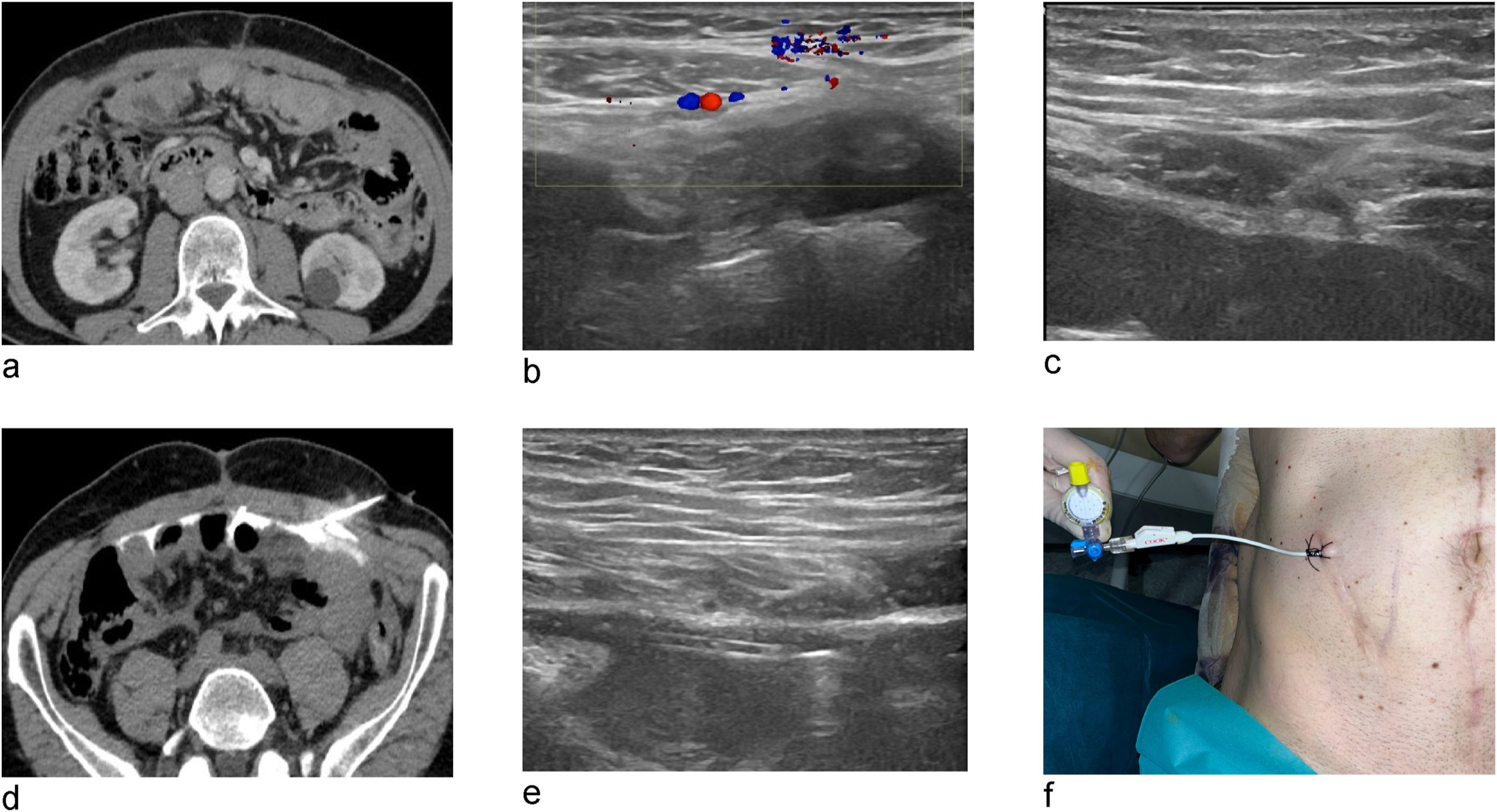
Preoperative Progressive Pneumoperitoneum (PPP) is a minimally invasive medical procedure that involves the gradual, intermittent, and controlled introduction of filtered air into the abdominal cavity over several days prior to surgery.
Traditionally, this technique has been utilized in general surgery for the repair of large, complex abdominal wall defects (hernias with loss of domain). In those cases, its primary function is to act as a tissue “expander,” naturally increasing the volume within the abdominal cavity.
The great innovation achieved by the IVOQA team has been to adapt this concept—for the very first time in worldwide medical literature—to facilitate safe surgical access for patients with advanced peritoneal cancer who were previously deemed ineligible for laparoscopy.

The procedure is performed under propofol sedation and intravenous antibiotic prophylaxis to ensure the patient experiences no discomfort.

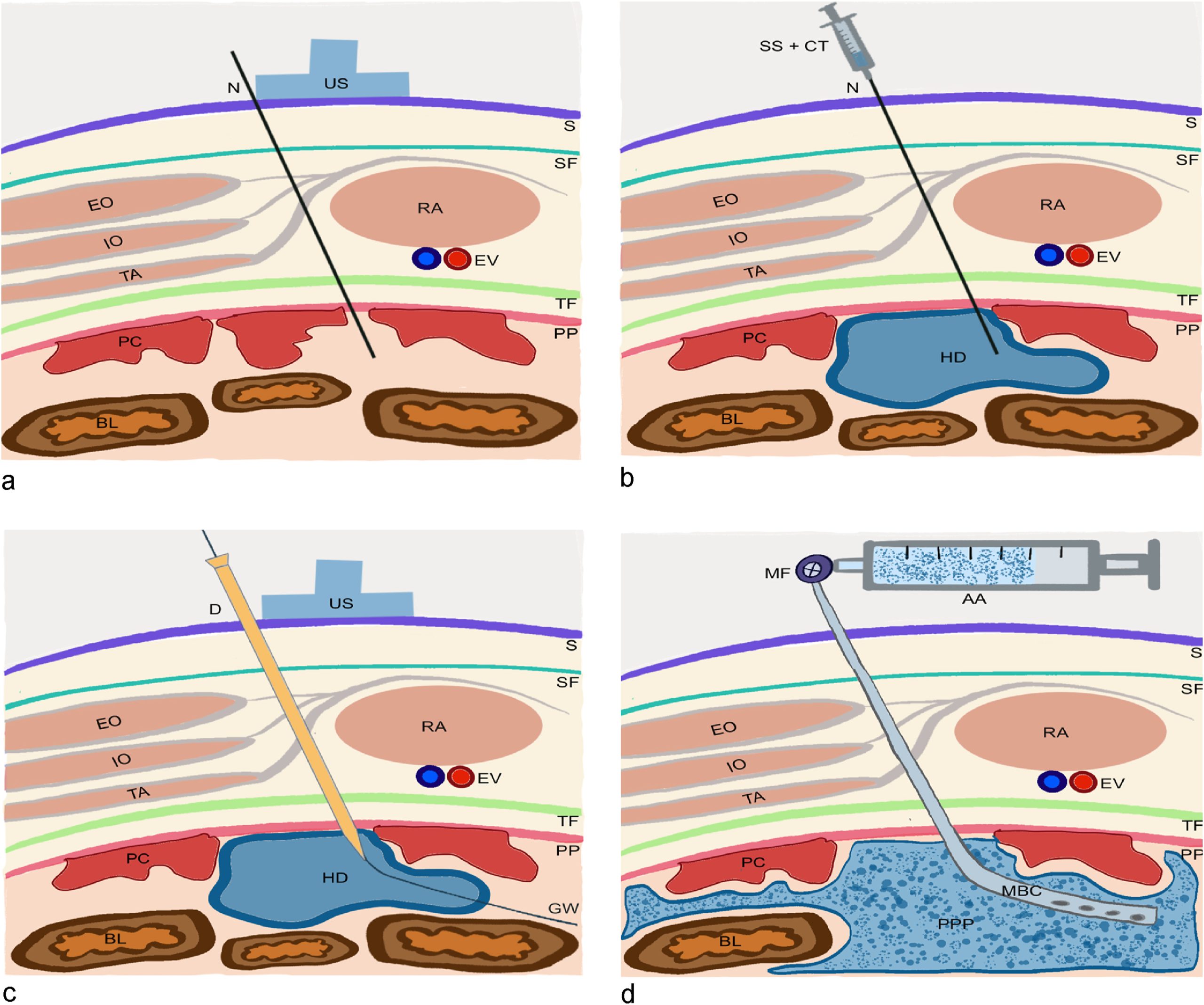
Interventional radiologists identify the safest and most precise entry point on the abdominal wall in real time, strictly avoiding the epigastric blood vessels and tumor implants.

A millimetric needle is introduced to inject a mixture of saline solution and contrast media. This fluid gently separates the tissue layers, creating a small, safe "artificial pocket" of approximately 100 mL.

A very fine drainage catheter (8.5 French) equipped with an antibacterial filter is positioned within this protected space. A minimal initial air volume of 100 to 200 mL is insufflated, and correct placement is confirmed via a control CT scan.

Over a mean of 5.5 days (ranging from 4 to 7 days), 250 to 500 mL of filtered air is intermittently introduced through the catheter each day.

The process continues until an accumulated volume of 1 to 3 liters of air is reached, always tailored to the patient’s physical tolerance.

Medical staff assess the patient daily to monitor for any adverse symptoms, such as significant pain, respiratory distress, or nausea.

Once a minimum volume of 1 liter of air is reached, the patient is ready for surgery. On the day of the PIPAC procedure, a CT scan is performed to verify that the adhesions have elongated and that there is sufficient pneumatic space to operate with 100% safety.
The prospective trial, co-led by IVOQA’s interventional radiology and surgical oncology teams and published in the European Journal of Surgical Oncology, has demonstrated highly encouraging outcomes:

In all patients treated at IVOQA who initially presented with a non-accessible abdomen, optimal and safe laparoscopic access was successfully achieved.

Thanks to the space gained through PPP, a total of 13 aerosol chemotherapy procedures (PIPAC and ePIPAC) were effectively delivered to individuals who previously had zero options to receive them.

No medical complications or adverse side effects of any grade were recorded from either catheter placement or air insufflation, proving to be an exceptionally safe and well-tolerated method for oncology patients.
Thanks to this multidisciplinary approach implemented at the Hospital Universitario Viamed Santa Elena, one of the most complex technical barriers in peritoneal surgical oncology has been broken, opening a real window of opportunity to resume advanced treatments when options seemed completely exhausted.
No. The placement of the microcatheter is performed under sedation and local anesthesia. Daily air insufflations are highly progressive and fully adjusted to the patient’s individual tolerance.
The process takes between 4 and 7 days. On the exact day of the aerosol chemotherapy, a CT scan is performed to confirm that the space created is optimal and safe for surgery.
It is indicated for patients with peritoneal carcinomatosis who are candidates for PIPAC but present with severe adhesions due to prior surgeries, provided they do not have symptoms of severe bowel obstruction.
No. The ambient air is strictly introduced through a high-efficiency bacterial filter that guarantees the sterility of the entire process. The IVOQA study recorded zero infectious complications.
If you are looking for a second opinion regarding advanced treatments for peritoneal cancer, contact Dr. Delia Cortés-Guiral’s team at IVOQA through our standard appointment channels.