
Liver cancer: symptoms, risk factors, and prevention

Table of contents

Liver tumors have a high mortality rate if detected in advanced stages. Therefore, it is crucial to perform routine screening tests in patients with risk factors and pre-existing liver disease in order to detect the disease in its early stages.


What is liver cancer?

Liver cancer is the sixth most common cancer and the third leading cause of cancer death worldwide. Hepatocellular carcinoma (HCC) is the most common type of liver cancer in adults (followed by cholangiocarcinoma) and usually occurs in people with chronic (long-term) liver disease caused by the hepatitis C virus or cirrhosis.

It is estimated that 60 to 90 percent of hepatocarcinomas are associated with cirrhosis, the primary non-viral cause of which is alcohol abuse.


Importance of recognizing the symptoms

Liver cancer is a preventable tumor. The most common patient profile is a person with diagnosed or undiagnosed cirrhosis that may be caused by hepatitis B virus (HBV) or hepatitis C virus (HCV) or by chronic alcohol abuse.

In this regard, it can be diagnosed silently on screening tests for the disease. The tumor usually gives no symptoms until it is at a very advanced stage of the disease, when the prognosis is already unfavorable. It may also present symptoms that alert your specialist.


Symptoms of liver cancer

Jaundice (yellowing of the skin and eyes)

Jaundice is a condition characterized by yellowing of the skin and eyes. This symptom is closely related to liver function.

The liver plays a crucial role in the processing of bilirubin, a yellow pigment formed during the normal breakdown of red blood cells. Normally, the liver converts bilirubin into a form that can be excreted through bile and ultimately eliminated from the body through the feces.
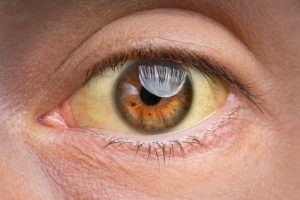
When there is a problem in the liver, such as liver disease, bile duct obstruction, or excessive hemolysis (breakdown of red blood cells), bilirubin is not processed properly. This leads to its accumulation in the blood, which causes the yellowish coloration characteristic of jaundice.

Pain and swelling in the abdomen

Pain in the upper right side of the abdomen can be a symptom of various health problems, but is commonly associated with liver and biliary conditions. This area of the abdomen houses the liver and gallbladder, so any inflammation, infection, or abnormal growth in these organs can cause pain

Unexplained weight loss and lack of appetite

Unexplained weight loss refers to a significant reduction in body weight without changes in diet or level of physical activity. This symptom can be alarming and is often an indication of a serious underlying condition, such as cancer

Fatigue and weakness

Extreme fatigue is a common symptom in patients with liver cancer. This fatigue is not relieved by rest and can be debilitating, affecting the patient’s quality of life

Nausea and vomiting

The liver is essential for metabolism and digestion. When its function is altered, as in the case of liver cancer, several digestive processes can be affected. The liver produces bile, which is crucial for the digestion of fats. If the liver cannot produce or release bile properly, this can lead to digestive problems such as indigestion, malabsorption of nutrients and accumulation of toxins in the body. In addition, the liver metabolizes many nutrients and medications; its dysfunction can disrupt these processes, causing digestive symptoms.

Swelling in the legs and ankles (edema)

Fluid retention, known as edema, occurs when the body retains more fluid than it should. In the context of liver cancer, impaired liver function can lead to a decrease in the production of essential proteins, such as albumin. Albumin helps maintain fluid balance in the body, and its deficiency can cause fluid to leak out of blood vessels into surrounding tissues, resulting in swelling.


Risk factors associated with symptoms

Several risk factors are closely associated with the occurrence of liver disease symptoms, including liver cancer.

  • Hepatitis B and C: these chronic viral infections are a major cause of liver cancer. Continued liver damage caused by these viruses can lead to cirrhosis and, eventually, the development of liver tumors.
  • Cirrhosis: this condition, which involves severe scarring of the liver, is an advanced stage of liver damage. Cirrhosis can result from chronic hepatitis, excessive alcohol consumption and other liver diseases. Scarring interferes with normal liver function and significantly increases the risk of liver cancer.
  • Excessive alcohol consumption: prolonged alcohol abuse can cause chronic liver damage, including hepatic steatosis (fatty liver), alcoholic hepatitis and cirrhosis. This damage increases the risk of developing liver cancer.
  • Family history: Having a family history of liver cancer may increase the risk of developing the disease. This may be due to shared genetic factors or exposure to common risk factors within the family.
  • Exposure to toxins— Exposure to certain toxins, such as aflatoxins (produced by molds that contaminate food) and industrial chemicals, can damage the liver and increase the risk of cancer. In addition, prolonged exposure to environmental and occupational toxins may contribute to the development of chronic liver disease.


What to do if you experience these symptoms

Detection of some of the above symptoms should be discussed with your hepatologist or primary care physician.

Early diagnosis can significantly improve the prognosis and effectiveness of treatment. Your doctor will perform a thorough evaluation and may recommend several diagnostic tests to get a clear picture of your liver health.

Common diagnostic tests

  • Ultrasound: An abdominal ultrasound is a noninvasive imaging test that uses sound waves to create images of the liver and other abdominal organs. This test can help detect tumors, cysts and other liver abnormalities.
  • Blood tests: Blood tests can measure bilirubin levels, liver enzymes and other substances that indicate liver function. These tests can help identify infections, inflammation and liver damage.
  • Liver biopsy: In some cases, your doctor may recommend a liver biopsy, which involves removing a small sample of liver tissue for examination under a microscope. This test can provide detailed information about the presence of cancer, cirrhosis and other liver diseases.


Prevention and regular check-ups

Although liver cancer has a high lethality, it is a preventable tumor. The most common causes of cirrhosis, such as the hepatitis virus, can be avoided through vaccination campaigns and avoiding chronic alcohol consumption.

In addition, fatty liver disease is associated with increased diabetes and obesity. Adopting a healthy lifestyle can prevent the development of liver diseases that can lead to liver cancer.


Leading a healthy lifestyle and treating the causes of cirrhosis that lead to the development of a liver tumor are critical to preventing liver cancer.

Once liver cancer has been detected, it is essential to put yourself in the hands of a multidisciplinary team. For this reason, at IVOQA we have oncologists specializing in the digestive system and interventional radiologists who work in collaboration with surgeons to offer you the best treatment.

You can make an appointment with our expert surgeons in liver cancer surgery here.


Dr. Rosa María Morera

Radiation Oncology

  • Specialist in Radiation Oncology.
  • Degree in Medicine and Surgery.  Faculty of Medicine, Complutense University of Madrid (2-8-1990).
  • Head of the Radiation Oncology Department, Hospital Universitario La Paz, Madrid.
  • Expert with university micro-credential mention in Physics, Technology and Protontherapy. King Juan Carlos University.
  • Higher University Course in Design and Management of Proton Therapy Centres. King Juan Carlos University.
  • XIX Programme of Senior Management in Health Institutions. IESE Business School. University of Navarra.
  • Master in Administration and Management of Health Services XXIV Edition (2013-2014). Pompeu Fabra University.
  • Doctoral Thesis Reading: ‘Radical thoracic irradiation and pulmonary functional study in patients with locally advanced non-small cell lung cancer. Systematic review and prospective case series’ . Qualification of outstanding ‘cum laude’.
  • Doctorate courses: Complutense University of Madrid (1995-1997).
  • She is a researcher in numerous clinical trials, publishing several national and international scientific articles.

Dr. Jose María Oliver

Breast radiology

  • Breast radiologist and specialist in cryoblation of breast lesions in the IVOQA Breast Unit.
  • Degree in Medicine and Surgery from the University of Navarra (1983-1989). Specialisation via MIR in Radiology. Number 289.
  • Specialist in radiology in several renowned hospitals, international reference and pioneer in the application of cryoablation to breast pathology in Spain.
  • Head of the Breast Radiology Section at the Hospital Universitario La Paz.
  • Member of the Spanish Society of Medical Radiology (SERAM) and the Spanish Society of Diagnostic Imaging (SEDIM).

Dr. Jesús Cañete Gómez

General and Digestive Surgery. Oncological Surgery

  • Graduate in Medicine and Surgery from the University of Seville (2000- 2006).
  • Specialist in colon and rectal cancer surgery using a minimally invasive approach.
  • Training in transanal rectal cancer treatment (TAMIS and TaTME).
    Training in minimally invasive surgery at Jackson Memorial Hospital (Miami).
  • Specialist in General Surgery at Viamed Fatima Hospital, Seville (currently).
  • Doctor of Medicine from the University of Seville (‘cum laude’).
  • Associate Professor at the University of Seville Founder of the surgical team Laparoscopic Surgery Seville – MISS (Minimally Invasive Surgical Solutions) – minimally invasive surgical techniques in scheduled and emergency surgery.
  • He has written numerous publications in journals and books and is a member of the Spanish Society of Obesity Surgery (SECO), as well as the Spanish Association of Surgeons (AEC) and the Andalusian Association of Surgeons (ASAC).

Dr. Juan José Segura Sampedro

General and digestive surgery. Oncological Surgery

  • Degree in Medicine and Surgery from the University of Seville. 2003-2009.
  • Specialist in peritoneal carinomatosis.
  • Doctor of Medicine from the University of Seville (‘cum laude’).
  • Oncological Surgeon in the Section of Peritoneal, Retroperitoneal and Soft Parts Oncological Surgery, Department of General and Digestive System Surgery, Hospital Universitario La Paz, Madrid.
  • Associate Professor of Surgery, Faculty of Medicine, University of the Balearic Islands, Palma de Mallorca.
  • 3IP in the Research Group in Advanced Oncological Surgery, m-Health and Innovation in Surgical Technology, Institute for Health Research of the Balearic Islands (IdISBa), Palma de Mallorca.
  • He has written numerous publications in journals and books and is a member of the Spanish Society of Surgical Oncology (SEOQ), the Spanish Society of Coloproctology (AECP), the Spanish Association of Surgeons (AEC), the European Society of Oncological Surgery (ESSO) and the Spanish Group of Peritoneal Oncological Surgery (GECOP).

Pablo Soto

Specialist in sports training for oncology patients

  • Higher Degree in Dietetics (2020-2022)
  • Treatment and rehabilitation of cancer patients

Dr. Gonzalez Larriba

Medical oncology

  • Professor of Medical Oncology at the Complutense University of Madrid
  • Head of the Medical Oncology Section of the Hospital Clínico San Carlos in possession of the European Certificate in Oncology
  • Recognition of 6 six-year research periods + 1 six-year period of knowledge transfer
  • Master in Oncology Services Management by the University of Alcala de Henares
  • Visiting Professor of Oncology at the University of Palermo (Italy)
  • Multiple stays in international centres (Memorial Sloan Kettering Cancer Center, Gustave Roussy Institute, University of Lyon, Princess Margaret Hospital in Toronto, University of Pittsburgh)
  • Maximum recognition of the Professional Career by the Regional Ministry of Health of the Community of Madrid
  • Director of the Master’s Degree in Genitourinary Tumours at the Complutense University of Madrid
  • Founder and member of the Board of Directors of the Spanish Lung Cancer Group, Spanish Genitourinary Tumour Group and Spanish Melanoma Group
  • Member of the Board of Directors of the Spanish Society of Medical Oncology
  • Miembro de la European Society of Medical Oncology, American Society of Clinical Oncology, International Association for the Study od Lung Cancer, etc.
  • Author of more than 300 scientific articles, 400 conference papers and 60 scientific books, as well as speaker in more than 400 conference papers

Francisco Flores

Physiotherapy

  • Graduate in physiotherapy. UEM.
  • Master’s degree in respiratory physiotherapy. UNIVERSITAT
  • ROVIRA i VIRGILI.
  • MASTER specialist in conservative and invasive physiotherapy of myofascial pain syndrome and fibromyalgia. UAH.
  • SPIROMETRIST by the ERS-SEPAR for the performance and interpretation of SPIROMETRY.
  • MASTER Specialist in intratissue percutaneous electrolysis treatments EPI.
  • Specialist in the use and application of the INDIBA ACTIV system.
  • MASTER Specialist in Biomechanical Analysis, Intervention and Treatment “Check yourMOtion”.
  • NATIONAL CLASSIFIER for athletes with cerebral palsy.
  • NATIONAL CLASSIFIER of athletics for people with physical disabilities.
  • RESEARCH PROJECT: “Respiratory physiotherapy as a treatment for ARVC in high performance athletes”.

Dr. Javier Heras Aznar

BREAST UNIT

  • Graduate in Medicine and Surgery from Universidad Autonoma de Madrid 1992.
  • Specialist via MIR in Family Medicine at Hospital Universitario Ramón y Cajal 1994-1996.
  • Specialist via MIR in OBSTETRICS AND GYNECOLOGY at Hospital Universitario Santa Cristina in Madrid 1997-2001.
  • Specialized in the last 27 years in Gynecological Oncology and Breast Pathology, both malignant and benign, with experience in Oncoplastic Surgery.
  • Specialization Course in Oncoplastic Breast Surgery 2015.
  • Coordinator of the Breast Unit and the Breast Tumors and Gynecology Oncology Committee in Hospital Universitario Infanta Sofía.
  • Main Author of the Breast Unit Accreditation Project (Hospital Universitario Infanta Sofía) 2019-2020.

Dr. Beatriz García-Conde

DIGESTIVE SYSTEM MEDICINE

  • Graduate in Medicine and Surgery.
  • MIR specialisation in Digestive System Medicine, Puerta de Hierro University Hospital in Majadahonda. Currently working at the 12 de Octubre University Hospital.
  • Specialist in capsule endoscopy and in diagnostic and therapeutic endoscopy: chromoendoscopy, colon cancer screening, digestive dilatations, PEG placement, endoluminal vacuum therapy (fistulas/leaks), polypectomy/mucosectomy.
  • She also a general digestive consultant with a Master’s Degree in Neurogastroenterology.

Dr. Micaela Riat Castro Zocchi

DIGESTIVE SYSTEM MEDICINE

  • Graduate in Medicine and Surgery.
  • MIR specialisation in Digestive System Medicine, Princesa Hospital (Madrid).
  • Clinical consultation. Diagnostic and therapeutic endoscopy: Chromoendoscopy, Colon Cancer Screening, Placement of digestive prosthesis (oesophagus, colon), Digestive dilatations, PEG Placement, Endoluminal Vacuum Therapy (fistulas/leaks), Polypectomy/mucosectomy. Experience in Bariatric Endoscopy: Intragastric balloon.

Dr. Diana Fresneda Cuesta

DIGESTIVE SYSTEM MEDICINE

  • Graduate in Medicine and Surgery.
  • MIR specialisation in Digestive System Medicine, Jiménez Díaz Foundation. (Madrid)
  • Clinical consultation. Specialist in Endoscopic Capsule and in Diagnostic and Therapeutic Endoscopy: Chromoendoscopy, Colon Cancer Screening, Ligation of Oesophagus Varices, Placement of digestive prosthesis (oesophagus, colon), Digestive dilatations, PEG Placement, Endoluminal Vacuum Therapy (fistulas/leaks), Polypectomy/mucosectomy. Experience in bariatric endoscopy: intragastric balloon, POSE method and Endo-sleeve with POSE system, etc.

Dr. Teresa Valdés Lacasa

DIGESTIVE SYSTEM MEDICINE

  • Graduate in Medicine and Surgery
  • MIR specialisation in Digestive System Medicine, 12 de Octubre University Hospital (Madrid). Advanced Endoscopy Fellowship (ERCP and digestive prostheses) at Ninewells Hospital (United Kingdom). 2020-2021.
  • Clinical consultation and abdominal ultrasound.
  • Specialist in pancreatico-biliary conditions and therapeutic endoscopy: ERCP, placement of digestive prostheses (oesophagus, duodenum, colon, biliary), digestive dilatations, placement of PEGs, endoluminal vacuum therapy (fistulas/leaks), polypectomy/mucosectomy.

Dr. Andrés J. del Pozo García, MD. PhD.

DUAL SPECIALISATION IN DIGESTIVE SYSTEM MEDICINE / FAMILY AND COMMUNITY MEDICINE

  • Graduate in Medicine and Surgery.
  • Dual specialised training (MIR) at the Princesa University Hospital (Madrid).
  • Specialist in Digestive System Medicine and Specialised in Family and Community Medicine
  • PhD in Medicine from the Autonomous University of Madrid. Cum Laude. 2020.
  • Member of S.E.P.D, S.E.E.D., A.E.G, E.S.G.E, AESPANC, Board Member of GETTEMO; Consultant of Apollo Endosurgery in 2021.

Dr. José María Abadal Villayandre

SPECIALIST IN VASCULAR INTERVENTIONAL RADIOLOGY

  • Graduate in Medicine and Surgery from Navarra University.
  • MIR specialisation in Radiology, Radiodiagnosis at Gregorio Marañón University Hospital.
  • PhD in Radiodiagnosis from the Complutense University of Madrid. Cum Laude Doctoral Thesis.
  • Specialist in Vascular Interventional Radiology, accreditation from the Spanish Society of Interventional Radiology.
  • European Board Interventional Radiology (EBIR) Health Sciences) at Alfonso X el Sabio University. 2010-2014.
  • Medical Director of the “Centro de Radiología y Diagnóstico por Imagen”.
  • Scientific and research activity with numerous publications and research studies.
  • Director and professor of Interventional Vascular Radiology at the I-XI Endo-school. Teaching activity.
  • Member of SERAM (Spanish Society of Medical Radiology), CIRSE (Cardiovascular Interventional Radiology Society Europe), and Secretary of SERVEI (Spanish Society of Interventional Vascular Radiology).

Belén Pérez Peiro. Psychologist

SPECIALIST IN PSYCHO-ONCOLOGY

  • Graduate in Psychology
  • Clinical psychologist, Gregorio Marañón University General Hospital, Psycho-oncology, Gynaecological Psychology, Neuropsychology, Detoxification and Out-patient Hospital, inflammatory bowel disease and teenagers.
  • Clinical activity at the Niño Jesús Children’s University Hospital, Psychiatric and Eating Disorder Units.
  • Expert qualification in Psychosomatic Medicine and Health Psychology.
  • Expert qualification in Psychopathology and Psychiatry from the Spanish Society of Psychosomatic Medicine and Medical Psychology.
  • Specialist qualification in Psychotherapy and projective techniques, both of which are recognised by the Madrid Official Association of Psychologists.

Dr. Ana María Moreno

SPECIALIST IN INTERNAL MEDICINE AND NUTRITIONAL PREHABILITATION

  • Graduate in Medicine and Surgery. 1986– 1992.
  • Extraordinary Graduation Award. 1992.
  • MIR specialisation in Internal Medicine. Number 283.
  • Master’s Degree in Palliative Care from Valladolid University. 2011.
  • University Master’s Degree in Advanced Chronic Nursing and palliative care from Antonio de Nebrija University. 2017.
  • PhD Courses 1993.
  • Extensive professional career in many renowned hospitals.
  • Head of Internal Medicine Services at Viamed Santa Elena (Madrid). September 2021 – Present.
  • Teaching and research work.
  • Numerous publications and papers. Participation in courses and seminars.