


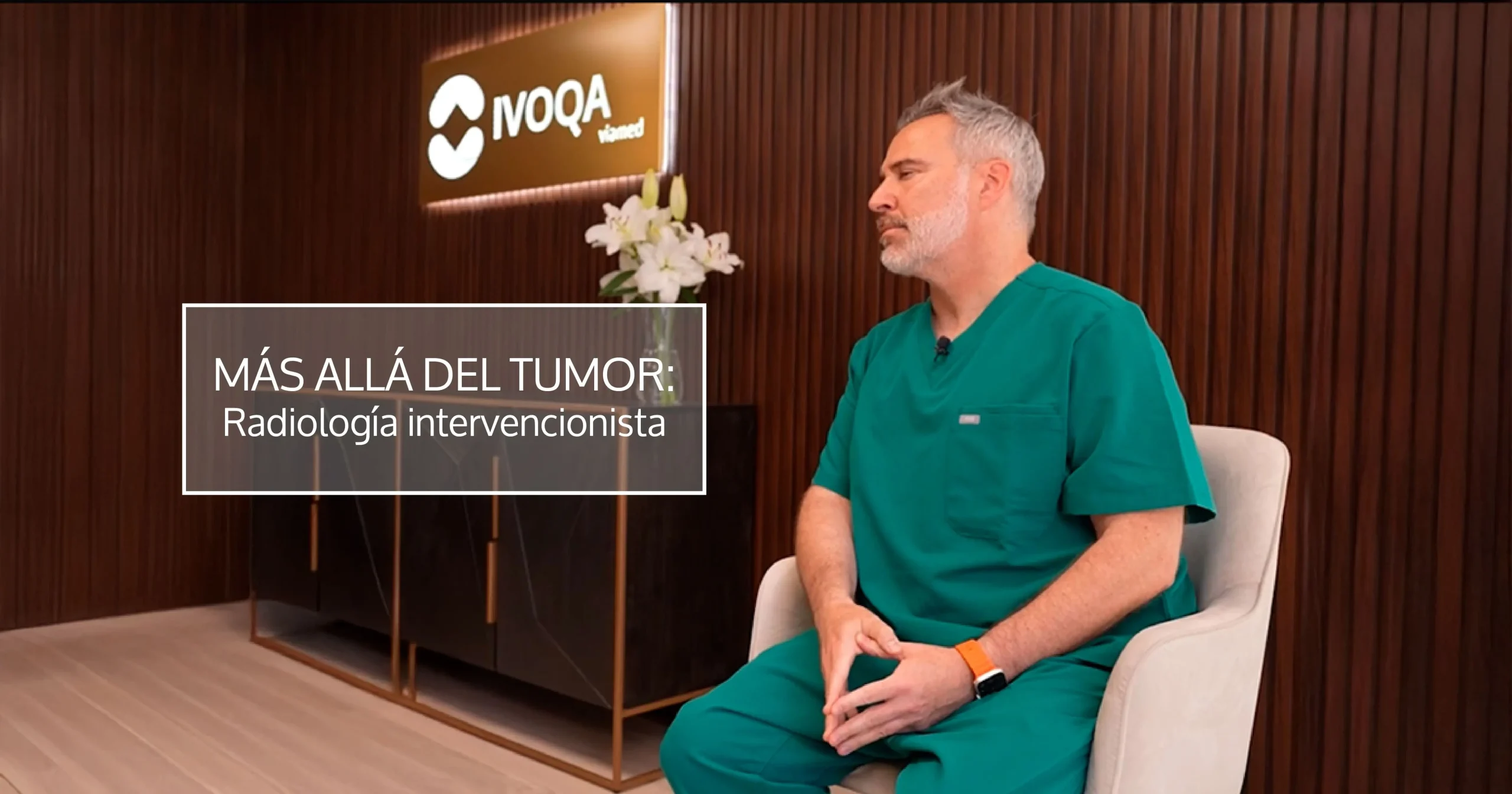
In a new edition of the series Beyond the Tumor: Answering Questions About Ovarian and Breast Cancer, organized by IVOQA and AMOH Asociación, Dr. José María Abadal, interventional radiologist at IVOQA, explains how minimally invasive techniques are transforming the treatment of metastatic cancer. These procedures are part of oncologic interventional radiology, a rapidly evolving field that offers effective alternatives for patients with advanced disease.
What is Interventional Radiology in Oncology?
Interventional radiology is a medical subspecialty that uses imaging techniques (such as ultrasound, CT, or MRI) to guide high-precision therapeutic procedures. In oncology, it enables the localized treatment of tumors and metastases without the need for open surgery. This approach offers an effective therapeutic alternative for patients who are not candidates for conventional surgery or who require targeted therapies for specific lesions.
Minimally Invasive Treatments for Metastatic Cancer
Dr. Abadal details several advanced techniques applied at IVOQA to treat liver metastases:
- Radiofrequency ablation (RFA): Destroys the tumor using heat.
- Irreversible electroporation (IRE): Uses electrical pulses to create pores in tumor cells without affecting nearby blood vessels or bile ducts.
- Transarterial chemoembolization (TACE): Combines localized chemotherapy delivery with embolization to treat tumors, mainly in the liver and hepatic metastases.
These techniques are part of locoregional therapies, which aim to control tumor growth and improve survival in selected patients.
Advantages of These Techniques
- Outpatient procedures or short hospital stays.
- Less invasive, with faster recovery times.
- Preservation of surrounding healthy tissue.
- Possibility of repeating the treatment if necessary.
- Improved quality of life for patients with advanced disease.
Moreover, these interventions can be integrated into a multidisciplinary approach alongside surgery, chemotherapy, immunotherapy, or radiotherapy, maximizing the effectiveness of comprehensive cancer treatment.
Who Can Benefit?
These techniques are indicated for patients with localized metastases who cannot undergo surgery or who require complementary treatment to surgery, chemotherapy, or immunotherapy. They are also useful in cases where tumor control or symptom relief is the primary goal. The ideal candidate is determined after evaluation by a multidisciplinary oncology board, considering the cancer type, metastasis location, and the patient’s overall condition.
At IVOQA, the commitment to innovation and personalized medicine allows each patient to receive the best possible therapeutic option, coordinated by a multidisciplinary team that evaluates each case comprehensively.


